The Role of Social Media Signals in SEO
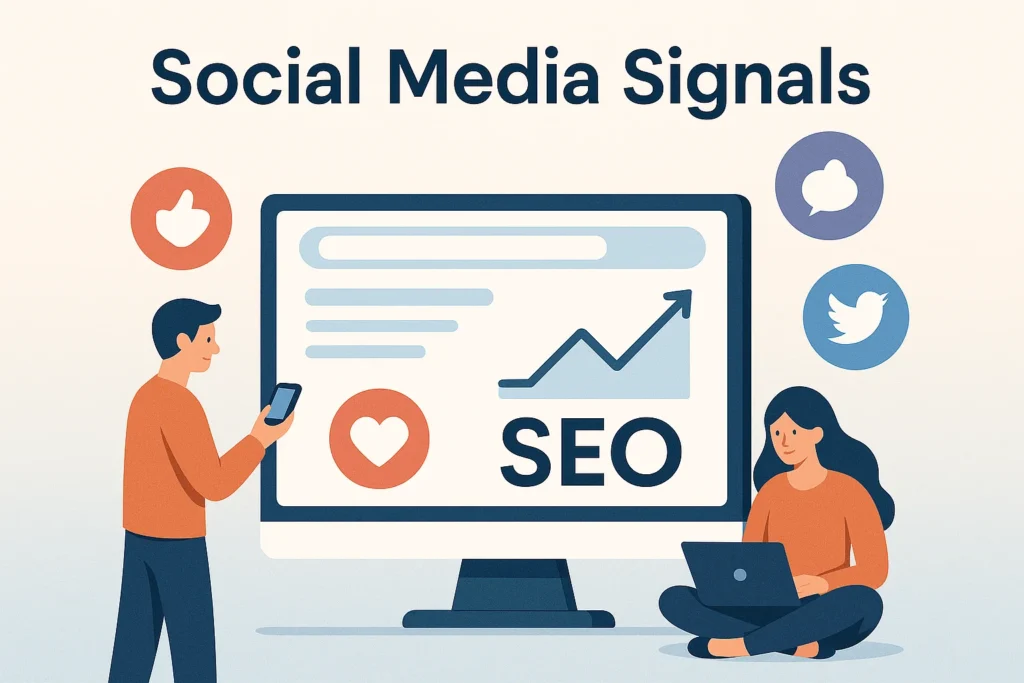
Social media signals have become one of the most misunderstood aspects of search engine optimisation. You’ll hear conflicting advice everywhere – some claiming social shares directly boost your rankings, others dismissing them entirely. The truth? It’s far more nuanced than either camp suggests.
Google has repeatedly stated that social signals aren’t direct ranking factors. Yet here’s what’s fascinating – websites with strong social media presence consistently perform better in search results. Coincidence? I think not.
After years of watching this space, I’ve noticed that the relationship between social media & SEO operates more like an intricate web than a simple cause-and-effect mechanism. The connections are there, but they’re indirect, subtle, and surprisingly powerful when you know how to leverage them properly.
What Social Signals Actually Are
Social signals encompass all the engagement metrics from social platforms – likes, shares, comments, retweets, pins, and everything in between. These numbers represent how people interact with your content across various social networks.
But here’s where it gets interesting. Each platform weights these signals differently, and the impact varies depending on the audience, timing, and content type. A LinkedIn share might carry different implications than a TikTok like, even though both count as social engagement.
The key thing to remember? Social signals reflect genuine human interest in your content. They’re essentially votes of confidence from real people who found your material worth sharing with their networks. That’s valuable currency in any marketing context.
Google’s algorithms are sophisticated enough to recognise patterns, even if they don’t directly count social shares. When content generates significant social buzz, it often indicates quality & relevance – two factors that search engines absolutely care about.
The Direct Ranking Factor Myth
Let me be crystal clear about this – Google does NOT use social signals as direct ranking factors. Matt Cutts confirmed this years ago, and subsequent Google representatives have maintained this position consistently.
Why not? Several reasons make sense when you think about it. Social platforms change their APIs frequently, making it unreliable for search algorithms. Privacy settings limit access to social data. Plus, social signals can be easily manipulated through bots & fake accounts.
However, this doesn’t mean social media is irrelevant to SEO.
The relationship is more subtle than a simple mathematical equation. When your content gets shared extensively, several things happen that DO influence search rankings, even if the social signals themselves don’t count directly.
Think of it like this – social media acts as a catalyst rather than a direct ingredient in your SEO recipe. It amplifies other factors that search engines definitely notice and reward.
How Social Media Boosts Content Visibility
Social platforms function as powerful distribution channels for your content. When someone shares your blog post or video, it reaches their entire network – people who might never have discovered your website otherwise.
This expanded reach creates opportunities for natural link building. Content that gains traction on social media often gets picked up by journalists, bloggers, and industry publications looking for trending topics to cover. These mentions frequently include backlinks to your original content.
The velocity matters too. Content that spreads quickly across social networks often experiences a corresponding surge in organic search traffic. Search engines seem to notice when something gains momentum rapidly, possibly interpreting it as a signal of freshness and relevance.
I’ve observed this pattern repeatedly – content that goes viral on social media often ranks higher in search results within days or weeks, even for competitive keywords. The social buzz appears to accelerate the natural SEO process.
Plus, social media exposes your content to different audience segments. Someone might discover your article through Facebook, bookmark it, then search for related terms later. These secondary searches can boost your click-through rates from search results.
Traffic Generation & User Behaviour Signals
Here’s where things get really interesting from an SEO perspective. Social media drives direct traffic to your website, and this traffic behaves in ways that search engines definitely monitor.
When visitors arrive from social platforms, they often exhibit different behaviour patterns than those from search results. Social traffic tends to be more engaged initially – after all, they clicked through because someone they trust recommended your content.
These visitors might spend longer on your site, view multiple pages, or return frequently. Search engines track these user behaviour signals – time on site, bounce rate, pages per session, return visits. Strong performance in these areas can positively influence your search rankings.
But there’s a caveat. Social traffic can also be more volatile and less qualified than organic search traffic. Someone might click through from Twitter out of curiosity, realise your content isn’t what they expected, and bounce immediately. This mixed bag of engagement metrics means you need to optimise carefully.
The key is creating content that satisfies both social audiences and search users. It’s a balancing act that requires understanding different user intents.
Natural Backlink Generation Through Social Sharing
This might be the most valuable indirect benefit of social media for SEO. When your content gains social momentum, it creates opportunities for earning high-quality backlinks organically.
Journalists and content creators constantly monitor social media for trending topics and interesting stories. Content that’s being shared widely often catches their attention, especially if it presents unique insights or data.
I’ve seen this happen countless times. A piece of research gets shared extensively on LinkedIn, then gets referenced by industry publications, trade magazines, and influential blogs. Each reference typically includes a backlink to the original source.
The process isn’t immediate, but it’s remarkably effective. Social media essentially acts as a discovery mechanism for link building opportunities that might never have materialised otherwise.
Academic researchers also use social media to find relevant studies and articles to cite in their work. If your content gains academic attention through social sharing, those citations can become extremely valuable backlinks from authoritative domains.
Remember though – this only works if your content is genuinely worth linking to. Social media can amplify quality content, but it can’t transform poor content into link-worthy material.
Brand Awareness & Search Behaviour
Social media significantly influences how people search for information online. When users become familiar with your brand through social platforms, they’re more likely to search for your company name directly or include it in their search queries.
These branded searches are incredibly valuable for SEO. They typically have high click-through rates and low bounce rates, since searchers are specifically looking for your content. Search engines interpret this as a strong relevance signal.
Social media also affects search behaviour in subtler ways. Users might see your content shared on Facebook, not click through immediately, but remember your brand name when searching for related information later.
This delayed effect is hard to measure but undeniably powerful. Your social media presence essentially primes potential customers to recognise and choose your content in search results, even if they first encountered you through social channels.
Additionally, social media can influence the language people use when searching. If your content consistently uses specific terminology or phrases that gain traction on social platforms, users might incorporate those terms into their search queries.
Platform-Specific Considerations
Different social platforms offer varying SEO benefits, and understanding these nuances can help you prioritise your efforts more effectively.
LinkedIn tends to drive highly qualified traffic, particularly for B2B content. Shares and engagement on LinkedIn often lead to valuable business connections and potential linking opportunities from industry websites.
Twitter excels at real-time content distribution and can drive immediate traffic spikes. It’s particularly effective for news-related content and trending topics. However, Twitter traffic often has higher bounce rates since users are quickly scanning through their feeds.
Facebook provides excellent reach for evergreen content and can drive sustained traffic over longer periods. Facebook groups, in particular, can be goldmines for reaching engaged niche audiences who are more likely to share and link to valuable content.
YouTube deserves special mention since it’s owned by Google. While YouTube signals might not directly influence web search rankings, the platform itself is the second-largest search engine. Optimising your video content for YouTube can indirectly benefit your overall SEO strategy.
Pinterest works exceptionally well for visual content and can drive traffic for months or even years after initial publication. Pinterest pins often rank in Google image search results, providing another avenue for discovery.
Measuring Social Media’s SEO Impact
Tracking the connection between social media activity and SEO performance requires a multi-faceted approach. You can’t simply look at correlation between social shares and search rankings – the relationship is too complex for such simplistic analysis.
Start by monitoring referral traffic from social platforms using Google Analytics. Look for patterns between social media campaigns and subsequent changes in organic search traffic. Sometimes the impact appears weeks after the initial social activity.
Track brand-related search volume using tools like Google Trends or Google Search Console. Increases in branded searches often correlate with successful social media content, even if the connection isn’t immediately obvious.
Monitor your backlink profile regularly. When content gains social traction, you should see an increase in referring domains over the following weeks or months. Tools like Ahrefs or Majestic can help identify these new links and their sources.
Pay attention to user engagement metrics for visitors coming from social media. High-quality social traffic should exhibit reasonable time on site and low bounce rates. If social visitors immediately leave your site, it might indicate a mismatch between your social messaging and actual content.
Don’t expect immediate results. The SEO benefits of social media often materialise gradually, sometimes taking months to become apparent in your analytics data.
The Bottom Line
Social media signals don’t directly influence search rankings, but dismissing them as irrelevant to SEO would be a significant mistake. The relationship is indirect but undeniably powerful.
Think of social media as an accelerator for your SEO efforts rather than a replacement for traditional optimisation techniques. It amplifies content visibility, creates link building opportunities, drives qualified traffic, and builds brand awareness that influences search behaviour.
The most successful SEO strategies integrate social media thoughtfully rather than treating it as a separate channel. When your content resonates on social platforms, it creates a cascade effect that can boost your search performance in multiple ways.
Focus on creating genuinely valuable content that people want to share naturally. The social signals will follow, and so will the SEO benefits – even if you can’t always draw a straight line between cause and effect.