
Local SEO
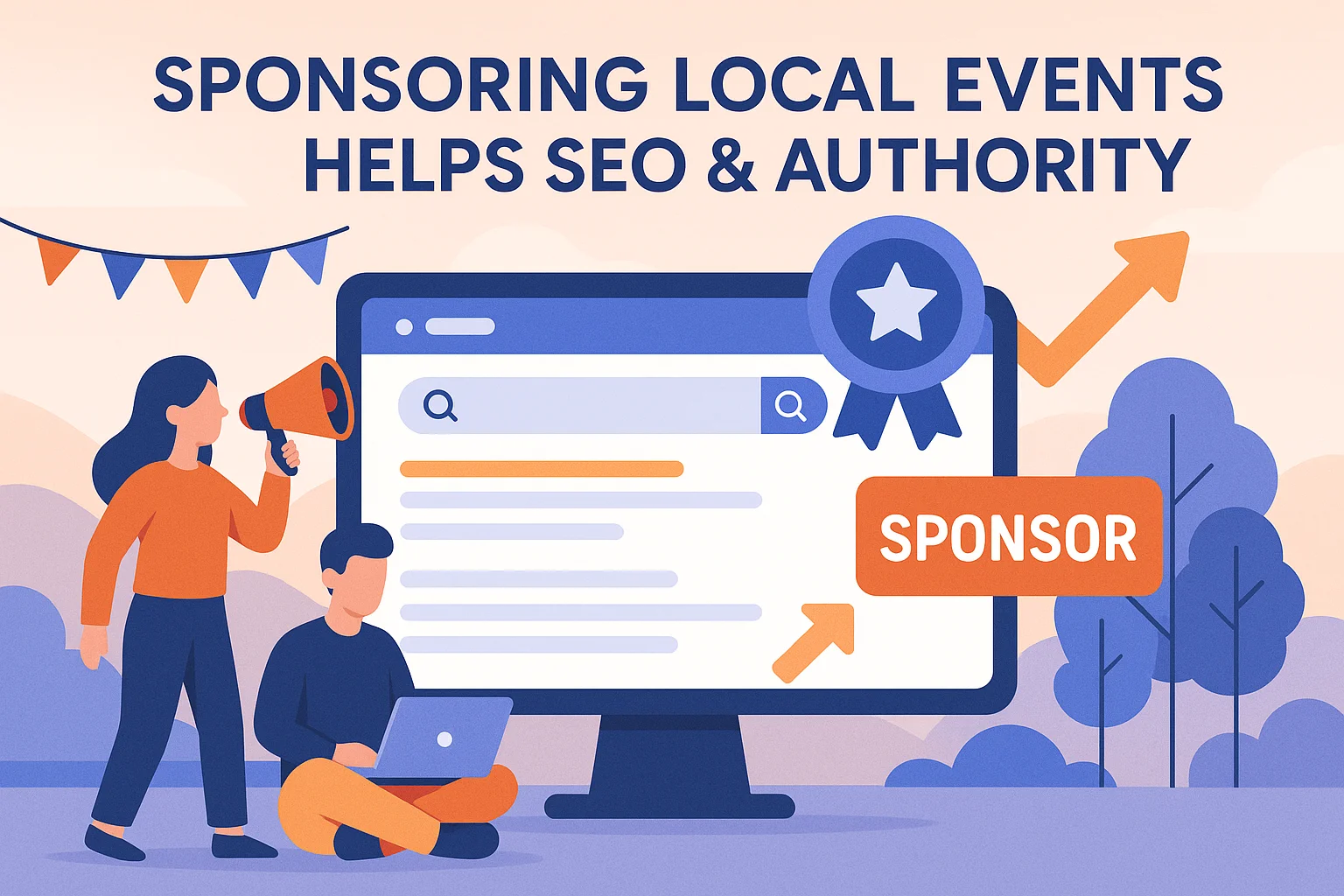
Why Sponsoring Local Events Helps SEO & Authority
How sponsoring local events earns backlinks, citations, reviews and brand recognition, and how to measure the SEO impact of a sponsorship.
 By Alexander Thomas, Founder Updated 7 min read
Key takeaways
- Local events create many websites, from organisers to local newspapers and community groups, and each can list your business with a link to your site.
- Sponsorship links are contextually relevant and naturally placed, come from varied local groups for link diversity, and look like genuine business relationships.
- Your logo on banners, race bibs and programmes makes your name feel familiar when people later need your services, and familiarity breeds trust.
- Every sponsor mention is a citation, so give every organiser, journalist and website admin exactly the same business name, address and phone number.
- Measure the impact over 3–6 months by tracking new backlinks, local rankings, citations, social mentions and, above all, actual enquiries.
On this page9 sections
Most businesses think about SEO in terms of keywords, content, and technical fixes. That’s not wrong, but it’s incomplete. There’s this whole other side that people overlook: local sponsorships. I’m talking about putting your brand name on the local football tournament or backing the annual charity run. Sounds old school? Maybe. But it’s one of the most effective ways to build genuine authority and boost your search rankings.
The connection between sponsoring community events and SEO success isn’t immediately obvious. Yet once you see it, you can’t unsee it.
The Backlink Goldmine Nobody Talks About
Local events generate websites. Lots of them. The organising committee creates an official site. Local newspapers cover the story. Community groups share details. Participants blog about their experiences. Photography businesses showcase their work. Each one of these sites needs sponsors listed somewhere.
That’s where your business name appears with a link back to your website. Not some dodgy link farm or paid directory, but genuine community websites with real visitors and established authority. These backlinks carry weight because they’re contextually relevant and naturally placed.
I’ve seen local businesses gain 15-20 quality backlinks from a single event sponsorship. Try getting that many legitimate links through outreach emails. Good luck with that.
The beauty lies in the variety. Sports clubs, charity organisations, arts festivals, school fundraisers. Each operates in slightly different circles but they’re all connected to your local area. This creates what SEO experts call “link diversity” – but it happens organically rather than through some manufactured scheme.
Google’s algorithms have become sophisticated at detecting artificial link patterns. But sponsorship links? They look exactly like what they are: genuine business relationships within a community. No red flags. No penalties. Just solid, trustworthy signals pointing back to your site.
Brand Visibility That Actually Matters
Online visibility is great, but local businesses need local recognition. When your logo appears on race bibs, stage banners, and programme booklets, people notice. More importantly, they remember.
This isn’t about impressions or reach metrics that sound impressive but don’t translate to real business. It’s about getting your brand in front of people who live and work in your area. People who might actually need your services.
The psychological impact is subtle but powerful.
Someone might not consciously register your sponsorship of the local dog show. But three weeks later when they need a plumber, your business name feels familiar. Familiarity breeds trust, and trust drives conversions. This kind of subconscious brand building is incredibly difficult to achieve through traditional advertising.
Plus, event marketing creates multiple touchpoints. Your brand appears in pre-event publicity, during the event itself, and often in post-event coverage. That’s three separate opportunities for potential customers to encounter your business, each reinforcing the previous exposure.
Building Genuine Community Connections
Search engines aren’t just looking at your website in isolation anymore. They’re evaluating your entire online presence, including social signals, reviews, and local citations. Community involvement feeds directly into these ranking factors.
When you sponsor local events, people talk about it on social media. They tag your business in photos. They mention you in Facebook posts and tweets. This social activity sends positive signals to search algorithms about your relevance and engagement within the local community.
More importantly, you’ll meet other local business owners, community leaders, and potential customers face to face. These relationships often lead to collaborations, referrals, and additional marketing opportunities that you simply can’t replicate online.
I know a local accountancy firm that started sponsoring youth football matches. Within six months, they’d gained three major business clients whose kids played in the league.
The connections weren’t forced or salesy. They developed naturally through shared community involvement. That’s the kind of relationship building that creates long-term business growth, not just short-term SEO gains.
Local Citations and NAP Consistency
Every time your business gets mentioned as an event sponsor, you’re creating what SEO professionals call a “citation.” That’s any online mention of your business name, address, and phone number – often abbreviated as NAP.
Local search rankings depend heavily on citation consistency across different websites. The more places your business information appears accurately, the more confidence search engines have in your legitimacy and location.
Event sponsorship creates citations automatically. The organisers list you on their website. Local media includes your details in coverage. Community Facebook groups share sponsor information. Each mention reinforces your local presence and improves your chances of appearing in “near me” searches.
But here’s something crucial that people often miss.
You need to provide consistent information to everyone involved. One website lists your address as “123 High Street” while another uses “123 High St” and suddenly you’ve got conflicting citations. Google gets confused about which version is correct, and your local rankings suffer.
Before committing to any sponsorship, make sure you’ve got a standard format for your business information. Then provide exactly the same details to every organiser, journalist, and website admin who needs them. It seems pedantic, but consistency matters enormously for local SEO.
Content Marketing Opportunities
Sponsoring local events gives you legitimate reasons to create content. You can write about why you chose to support the cause. Share behind-the-scenes photos from the event. Interview organizers or participants. Create videos showcasing community involvement.
This content feels genuine because it IS genuine. You’re not manufacturing blog posts about random topics hoping they’ll rank for competitive keywords. You’re documenting real business activities and community relationships.
Search engines reward authentic, locally relevant content. A blog post about sponsoring the town’s Christmas market will likely perform better for local searches than generic industry articles copied from elsewhere.
Plus, event-related content often attracts social shares and comments from people who attended or supported the cause.
This engagement boosts your content’s visibility and helps establish your website as an active, community-focused resource. Over time, this positioning can lead to higher rankings for broader business-related searches in your area.
The key is documenting your involvement thoughtfully rather than just slapping a logo on something and forgetting about it. Show the human side of your business. Explain why you chose to support that particular cause. Share what you learned or enjoyed about the experience.
Reviews and Social Proof
Community involvement influences how people perceive your business online. When someone sees that you sponsor local youth sports or support charity events, it creates positive associations that extend to reviews and recommendations.
People are more likely to leave positive reviews for businesses they see as community-minded. They’re also more likely to defend you if negative reviews appear, because they feel personally connected to your success.
I’ve noticed that businesses active in local sponsorship tend to have more detailed, thoughtful reviews. Instead of just “Great service, would recommend,” people write things like “This company really cares about our community. They do excellent work and support local causes.”
Those kinds of reviews carry more weight with potential customers and search algorithms alike.
Social proof extends beyond formal review platforms too. When your business name comes up in local Facebook groups or community forums, people often mention your sponsorship activities alongside service recommendations. This creates a halo effect that enhances your reputation across multiple channels.
The impact compounds over time. Each positive interaction builds on previous ones, creating a stronger foundation for long-term business growth and improved search rankings.
Measuring Success and ROI
Tracking the SEO impact of local sponsorship requires patience and the right metrics. You won’t see immediate ranking improvements, but you should monitor several key indicators over 3-6 months.
Start with backlink acquisition. Use tools like Ahrefs or SEMrush to track new links pointing to your site. Note which domains link to you and their authority scores. Quality matters more than quantity, but both are important for long-term SEO success.
Monitor local search rankings for your key services and location-based keywords. Track positions for terms like “plumber in [your town]” or “accountant near me.” Improvements might be gradual, but consistent upward movement indicates positive momentum.
Don’t forget about citation monitoring either.
Tools like Moz Local can help you track where your business information appears online and flag any inconsistencies that need addressing. The goal is building a comprehensive, accurate online presence that reinforces your local authority.
Social metrics deserve attention too. Track mentions, tags, and engagement around your sponsorship activities. This social signal activity contributes to overall SEO performance, even if the connection isn’t immediately obvious.
Most importantly, measure actual business outcomes. Are you getting more enquiries? Do customers mention seeing your sponsorship when they contact you? SEO success means nothing if it doesn’t translate to increased revenue and customer acquisition.
The Bottom Line
Local event sponsorship works for SEO because it creates genuine value for real people in your community. It’s not a quick fix or a shortcut – it’s a long-term strategy that builds authentic authority and trust.
The backlinks, citations, and social signals are valuable, but they’re really just byproducts of something more important: showing up consistently for your local community. Search engines recognize and reward that kind of authentic local engagement.
Start small if you need to. Find a local cause that genuinely interests you and offer modest support.
The key is consistency rather than grand gestures. Regular, ongoing community involvement will always outperform sporadic large sponsorships when it comes to building lasting SEO authority and business growth.
Your competitors are probably still focused on technical SEO fixes and content strategies. That’s fine – let them chase algorithm updates while you build real relationships in your community. I think you’ll find the results speak for themselves.
Frequently asked questions
How does sponsoring a local event earn backlinks?
Local events generate websites, from the organising committee's official site to local newspaper coverage, community groups and participants' blogs. Each of these sites needs sponsors listed somewhere, which is where your business name appears with a link back to your website. Some local businesses gain 15-20 quality backlinks from a single event sponsorship.
Are sponsorship links safe from Google penalties?
Yes, because they look exactly like what they are: genuine business relationships within a community. Google's algorithms have become sophisticated at detecting artificial link patterns, but sponsorship links come from real community websites with established authority, so they send trustworthy signals rather than red flags.
Does sponsoring an event help with local citations?
Yes. Every time your business is mentioned as an event sponsor with its name, address and phone number, you create a citation. Organisers, local media and community Facebook groups all share sponsor details, and each mention improves your chances of appearing in near me searches.
Why does consistent business information matter when you sponsor events?
Conflicting details confuse Google about which version is correct, and your local rankings suffer. If one website lists 123 High Street and another uses 123 High St, you have conflicting citations. Set a standard format first and give exactly the same details to everyone involved.
What content can you create from a local sponsorship?
You can write about why you chose to support the cause, share behind-the-scenes photos, interview organisers or participants and create videos showcasing your community involvement. This content is genuine and locally relevant, and it often attracts social shares and comments from people who attended.
Can community involvement lead to better reviews?
Yes. People are more likely to leave positive reviews for businesses they see as community-minded, and more likely to defend you if negative reviews appear. Businesses active in local sponsorship also tend to have more detailed, thoughtful reviews, which carry more weight with potential customers and search algorithms.
How long does it take to see the SEO impact of a sponsorship?
You will not see immediate ranking improvements, so monitor key indicators over 3–6 months. Track new backlinks with tools like Ahrefs or SEMrush, local rankings for location-based keywords, citations and social mentions, and above all whether you are getting more enquiries.
Further reading
- Ahrefs, Ahrefs
- Semrush, Semrush
- Built to fail: How the home repairs market is failing consumers, Citizens Advice