Google Needs Entity Trust Signals To Rank Your Brand in 2026

Google needs 50 unique trust signals before it even considers your brand a real entity worth ranking. That is the hard truth. Most people think they can just spin up a website and start blogging but it doesn’t work that way anymore.
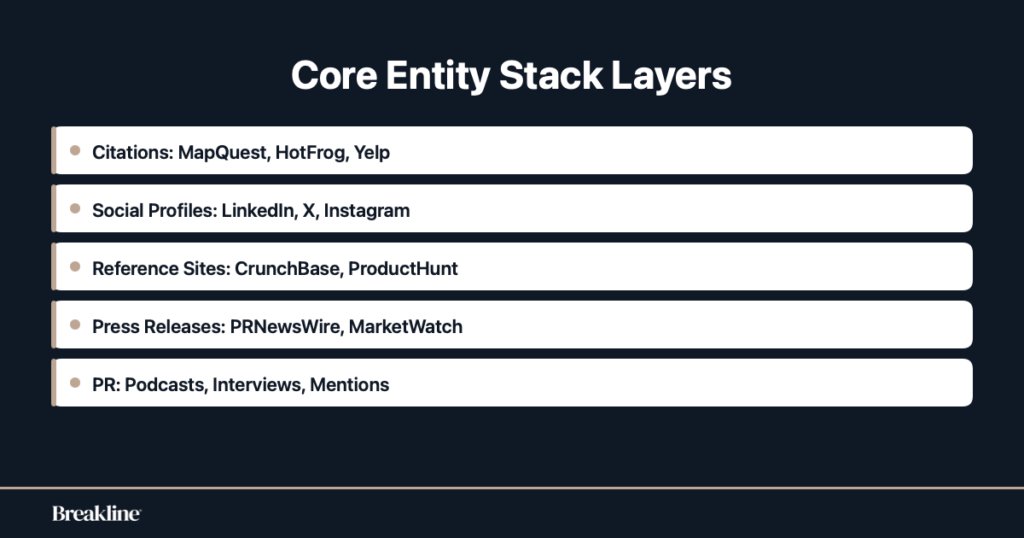
Before you write a single word of content or build a single backlink you need to establish what we call an Entity Stack. This consists of citations from places like Yelp and the BBB plus social profiles on LinkedIn and others and reference sites like CrunchBase. You also need press releases and general PR.
Without these 50 validation points your site is just a ghost to the algorithm. It might have great content but it lacks the identity verification that modern search engines require.
I have been running an SEO agency for 15 years and I see this mistake every single week.
Why Your Content Is Invisible Even If It Is Good
You pour your heart into an article. You do the keyword research. You optimize the headers. You even add some nice images. You hit publish and you wait. And you wait.
Nothing happens.
Meanwhile you look at the search results and see a competitor ranking number one with an article that is objectively worse than yours. It is shorter. It is ugly. The grammar is bad. You scratch your head and think the system is broken. But it isn’t broken. It is working exactly how Google intends it to work.
The difference between you and that competitor is Entity Trust Signals. Google knows who they are. It has verified their existence through dozens of third-party sources. They have a digital footprint that confirms they are a real business with real people and a real reputation.
You do not.
To Google your new site looks like a burner phone. It looks temporary. It looks suspicious. In 2026 with the flood of AI content filling up the index Google has become paranoid. It has to be. If it ranked every page that had good text it would be overwhelmed with spam. So it uses entity signals as a filter. If you don’t pass the filter you don’t get to rank. It is that simple.
The Mechanics of Entity Validation
I think people get confused about what a “signal” actually is. In the old days we just called these links. But they aren’t just links. A link is a vote of confidence but a trust signal is a proof of identity.
When Wikipedia or Bloomberg mentions your brand they aren’t just passing “link juice”. They are telling Google’s Knowledge Graph that you exist in the physical universe. They are confirming your name and your address and your phone number and your CEO’s name.
This is where SEO shifts from keywords to entities. An entity is a thing. A person or a place or a concept. Google wants to rank entities not just strings of text. When you build these 30 to 50 signals you are essentially filling out your passport application for the internet.
Without the passport you can’t travel.
The Entity Stack Checklist You Need
At Breakline we don’t even look at keywords for the first month of a new campaign. We focus entirely on what we call Entity Stacking. It is boring work. It is repetitive. But it is the foundation for everything else.
Here is the stack we use.
Citations are the first layer. These are business directories. You need to be on the big ones like MapQuest and HotFrog and BrownBook. You need to be on the Local Chamber of Commerce site. These sites verify that you have a location and a phone number.
Social Profiles are next. You might hate social media. I get it. I am not a fan of scrolling through TikTok either. But you need to claim your brand name on every major platform. Facebook and X and Instagram and YouTube. Even if you never post anything. The profile itself is the signal.
Reference Sites are the heavy hitters. These are places like PitchBook and ProductHunt and GlassDoor. Getting listed here usually requires some verification. That verification is exactly what Google wants to see.
Press Releases act as a broadcast. Using services like PRNewsWire or MarketWatch distributes your brand name to hundreds of news sites instantly. It creates a massive surge of citations.
Finally you have PR. This is the hardest one. Interviews and podcast appearances. Real humans talking about you.
Why You Can Build This Fast
Here is a secret that most SEOs won’t tell you because they want to charge you a monthly retainer for years. You can build this entire stack in a week. Seriously.
You don’t need to worry about link velocity here. Link velocity is a concern when you are building spammy backlinks from shady blogs. If you suddenly get 500 links from random WordPress sites in Russia Google will penalize you. But these are trusted sources.
Google expects a real business to appear on LinkedIn and Yelp and Yahoo finance simultaneously. That is what happens when a business launches. It is natural behavior.
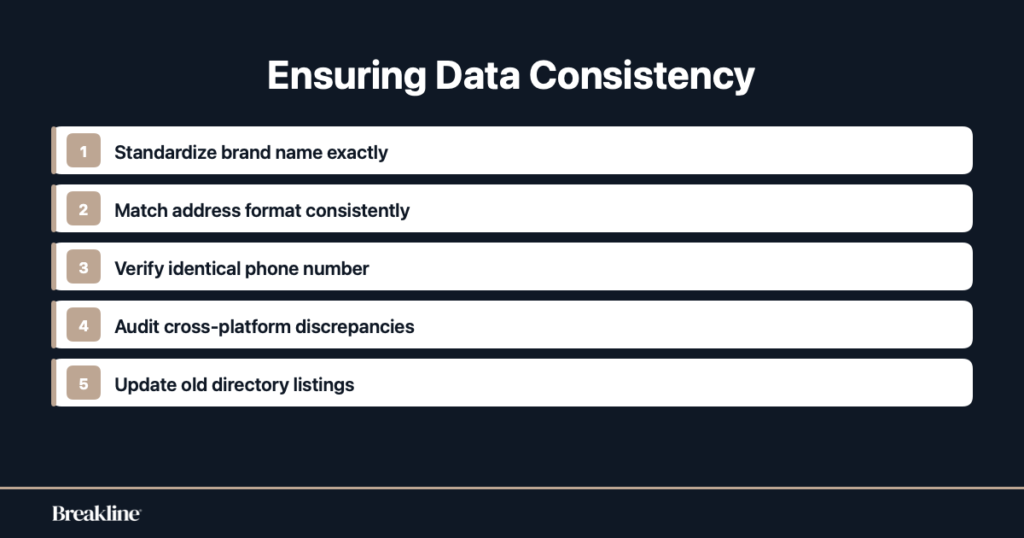
We blast these out immediately. We register everything. We ensure the NAP (Name Address Phone) is identical down to the comma. And Google doesn’t bat an eye. In fact it wakes up and pays attention.
Generative Engine Optimization is the Future
We have to talk about AI. The search results aren’t just 10 blue links anymore. We have Generative Engine Optimization to worry about now. This is optimization for the AI overviews that sit at the top of the page.
How do these AI models decide what to say? They look for consensus. They look for facts that are repeated across trusted sources.
If your brand is mentioned on 40 high-authority sites the AI treats you as a fact. It treats you as data. When someone asks the AI for the “best running shoes” or “reliable accountants” it pulls from the entities it trusts.
If you have zero Entity Trust Signals the AI doesn’t know you exist. It can’t recommend you. You are invisible to the most important part of the search results page. It seems obvious when you say it out loud but so many people miss this.
The Technical Side of Trust
It isn’t just about off-site signals. Your website needs to broadcast trust too. This is where technical SEO comes in.
You need HTTPS obviously. But you also need Organization Schema. This is code that lives in the background of your site and tells Google “Hey we are the same company that is listed on CrunchBase.”
You use the “sameAs” property in your schema to link out to your social profiles and your citations. You are literally connecting the dots for the crawler. You are making it easy for them. I think sometimes we forget that Google is just a machine. It isn’t a human reading your site. It is a script parsing code. Schema is the language it speaks best.
Also check your site speed and your About Us page. If your About page is two sentences long and doesn’t list a physical address you are hurting your trust score. Be transparent. Show your face. List your email.
Don’t Ignore the E-E-A-T Framework
You have probably heard of E-E-A-T. Experience Expertise Authoritativeness and Trustworthiness. It is a mouthful. But it is the guideline Google uses to rate quality.
Entity Trust Signals are the fuel for E-E-A-T. You can’t have Authoritativeness if nobody cites you. You can’t have Trustworthiness if you don’t have a third-party reputation.
When we audit a site using tools like Semrush we look for these gaps. If a client has great content but low authority we know exactly what to do. We don’t write more content. We build the entity.
I remember a client last year who had an amazing product but a brand new domain. We spent three weeks doing nothing but entity stacking. We got them on AngelList and every industry directory we could find. We didn’t touch their blog. Their traffic doubled in a month. Just from trust signals.
It is wild when you see it happen.
The Common Pitfalls to Avoid
There are ways to mess this up. The biggest one is inconsistency. If you are “Breakline Ltd” on one site and “Breakline Agency” on another and “Breakline SEO” on a third you are confusing the bot.
It might seem like a small detail to you. But to a machine those look like three different companies. You dilute your power. You need to be ruthless about consistency. Copy and paste your business name and address exactly every single time.
Another mistake is giving up too soon. You get 10 citations and think you are done. You aren’t. 10 is noise. 30 is a pattern. 50 is a fact. You need to hit that higher threshold to really move the needle.
And sometimes it is hard to accomodate all the different formats these directories require. Some want a suite number on line 2. Some want it on line 1. Do your best to keep it standard. It matters.
Social Media is Not Optional
I hear this from B2B clients all the time. “My customers aren’t on Instagram why should I be there?”
You aren’t on Instagram for your customers. You are on Instagram for Google. Google expects a legitimate brand to have an Instagram profile. If you don’t have one it looks weird. It looks like a hole in your data.
You don’t have to post selfies. Just set up the profile. Put your logo as the picture. Link back to your website. Fill out the bio with your keywords. Then leave it alone. That is enough to count as a signal.
The same goes for Pinterest or even FourSquare. Are people checking in to your consulting firm on FourSquare? Probably not. Does Google check FourSquare to verify your location data? Absolutely.
The Power of Press Releases
Some people say press releases are dead for SEO. They are wrong. They are dead for building “dofollow” links that pass PageRank directly. But they are very much alive for Entity Trust Signals.
When you put out a release on GlobeNewsWire it gets syndicated to hundreds of local news affiliates. These are high-trust domains. They usually use “nofollow” links which means they don’t pass direct ranking power. But they do pass entity confirmation.
They mention your brand name in the context of your industry. They associate you with your topic. That is gold for Generative Engine Optimization. It teaches the AI what you are about.
We use press releases to announce everything. New website launch. New hire. New service. It doesn’t matter. Just get the name out there.
Knowledge Panels Are the Goal
If you do this right you get the holy grail. A Knowledge Panel.
This is that box on the right side of the search results that lists your company details. If you have a Knowledge Panel Google has officially accepted you as an entity. You are in the club. Ranking becomes significantly easier after this point.
You can’t buy a Knowledge Panel. You can’t apply for one really. You earn it by reaching that critical mass of trust signals. Once the weight of evidence—those 30 to 50 sources—becomes undeniable Google creates the panel automatically.
It is a tipping point. You push and push and push with citations and profiles and suddenly you break through.
Why This Applies to Every Niche
It doesn’t matter if you are a local plumber or a global SaaS company. The principle is the same. The specific sites might change but the strategy does not.
If you are local you focus heavily on the Google Business Profile and local directories. If you are national you focus on CrunchBase and Wikipedia and broad market news.
But the number remains roughly the same. You need that volume of proof. I have never seen a brand rank competitively in a tough niche with fewer than 20 solid signals. It just doesn’t happen anymore.
My Experience With “Ghost” Sites
I call sites without signals “Ghost Sites”. We get inquiries from them often. The owner is usually frustrated. They have spent thousands on content writers. They have a beautiful design.
But when I search for their brand name nothing comes up except their own site. No social. No directories. No press. It is spooky.
I have to have the hard conversation. I have to tell them that to Google they look like a scam. It is harsh but it is necessary. We have to pause the content production and go back to basics. We have to build the floor before we can put up the walls.
It takes patience. But once those signals populate the rankings usually correct themselves pretty quickly. The content that was stuck on page 5 suddenly jumps to page 1 because the “trust dampener” has been lifted.
Final Thoughts
It can feel overwhelming to look at a list of 50 sites you need to register for. I know. It feels like busy work. But you have to shift your mindset. You aren’t just filling out forms. You are building the reputation of your business in the eyes of the most powerful AI in history.
You can’t trick the system anymore. You can’t hack your way to the top with hidden text or PBNs. You have to be real. And you have to prove you are real.
So take the week. Do the work. Get your citations. Claim your profiles. Get some press. Build that stack of 30 to 50 signals. Once you do that you will find that everything else in SEO gets a whole lot easier. Your content will stick. Your links will count for more. And you will finally stop being a ghost.