What are red flags when hiring an SEO agency?

If an SEO agency guarantees you the number one spot on Google or refuses to explain exactly what they are doing with your website, walk away immediately. Those are the absolute biggest SEO agency red flags you will ever encounter. A legitimate agency focuses on transparent strategies that drive actual phone calls and revenue for your business rather than promising impossible rankings that mean absolutely nothing.
You probably get emails every week from random companies promising to put your business on the first page of search results. It is exhausting. I see it all the time. You run a roofing company or a dental practice and you just want your phone to ring. You do not have the time to become a search marketing expert just to hire some help.
That is completely fair.
But you do need to know how to spot the bad actors before they drain your marketing budget and potentially get your website penalized. I think sometimes business owners ignore their gut feelings because the technical stuff sounds intimidating. It shouldn’t be. Good marketing makes logical sense.
The impossible promise of guaranteed rankings
Nobody controls Google. Not me. Not any agency out there. The search algorithm changes constantly and search results are highly personalized based on location and user history. So when a slick salesperson promises you the number one spot in thirty days, they are lying. It is that simple. They might actually get you to rank number one but it will be for a keyword that nobody ever searches for.
I remember speaking to a local solicitor a few years ago who was absolutely thrilled because his previous agency got him ranking first for a highly specific phrase. He was paying a fortune for this privilege. The problem was that literally zero people searched for “best commercial property dispute resolution solicitor in [tiny village name]” in any given month. He had the top spot for a ghost town.
Traffic was zero. Leads were zero.
But the agency could technically say they fulfilled their guarantee. A good practitioner will talk to you about improving your overall visibility and capturing relevant traffic. They will discuss realistic timelines because SEO takes time to build momentum. If someone says they can rush it they are taking dangerous shortcuts that will eventually catch up with your site and burn your reputation.
When they hide behind technical jargon
Search engine optimization is technical but it is not magic. If an agency tells you their methods are too complex to explain or they use phrases like proprietary algorithm manipulation strategies you should be extremely skeptical. Good agencies can explain their work in plain English without talking down to you.
If they are changing the metadata on your pages they should be able to tell you why. Metadata is just the title and description that shows up in the search results. It helps people decide whether to click on your link. It is not a state secret. We see this a lot at Breakline when new clients come to us after a bad experience. They hand over reports from their old agency that are just pages of meaningless graphs & acronyms. The client has no idea what work was actually completed.
Transparency is everything. You are paying for a service and you deserve to know what that service entails. If they refuse to share their process they are usually hiding the fact that they are doing very little work at all. Or worse they are doing spammy things that violate search engine guidelines.
Skipping the foundational strategy phase
You cannot apply a cookie-cutter approach to marketing. A local plumber needs a completely different strategy than a nationwide accounting firm. If an agency hands you a standard package of two blog posts and three links per month without asking about your specific business goals, they are cutting corners.
Proper planning takes effort. The agency needs to know who your ideal customer is and which of your services are the most profitable. Sometimes I think agencies forget that there are actual human beings behind these websites. They just want to plug your URL into a tool and hit go. But if they do not accomodate your specific market nuances the campaign will fail.
Yes I see this happen constantly.
There should be a discovery phase. They should be looking at your competitors and finding gaps in the market. If they just start churning out generic AI content on day one without a clear roadmap, you are wasting your money. They need to understand the pain points of your customers to write anything that actually resonates.
Generic reporting that ignores your business
Monthly reports that only show keyword rankings and raw traffic numbers are essentially useless if they do not connect to your actual business results. Traffic is great. I love seeing a graph go up and to the right. Obviously. But if that traffic does not turn into paying customers it is just a vanity metric. A total waste of time.
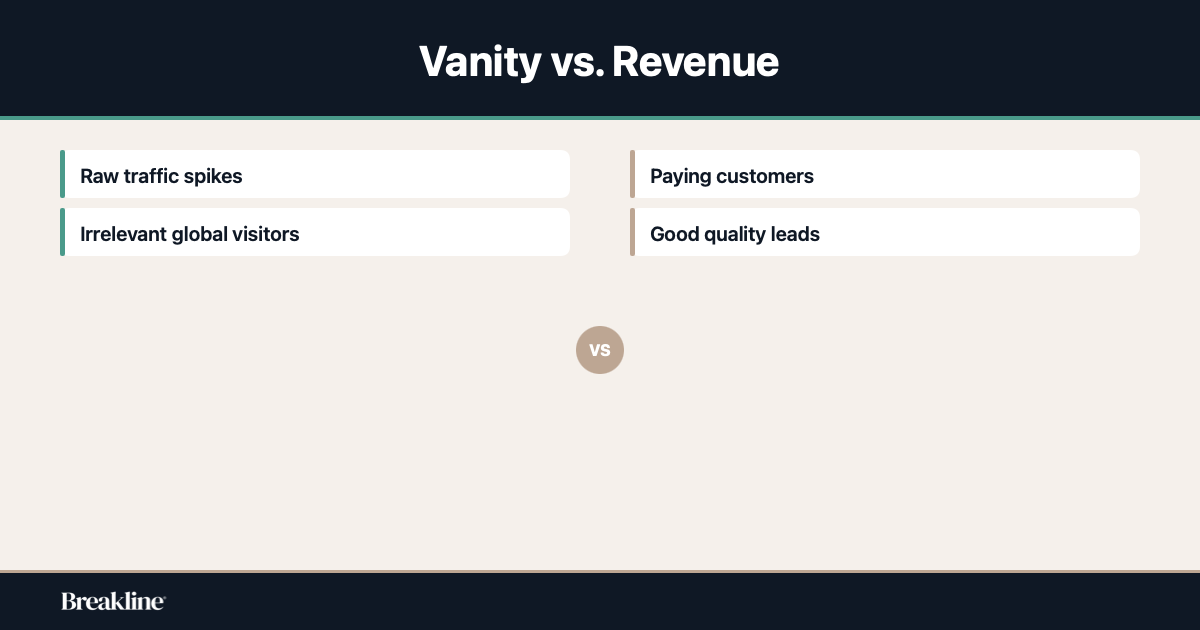
I have seen reports where an agency celebrates a massive spike in traffic. But when you look closer all that new traffic is coming from countries where the business does not even operate. A roofer in Manchester does not need website visitors from Brazil. It looks good on a chart but it doesn’t pay the bills.
Your agency should be tracking conversions. They should be setting up Google Search Console properly to see exactly how people interact with your site. They should be asking you if the phone is ringing and if the leads are actually good quality.
If your account manager cannot explain how their work translates to revenue they are focused on the wrong things. You are paying for growth.
Building low quality spam links
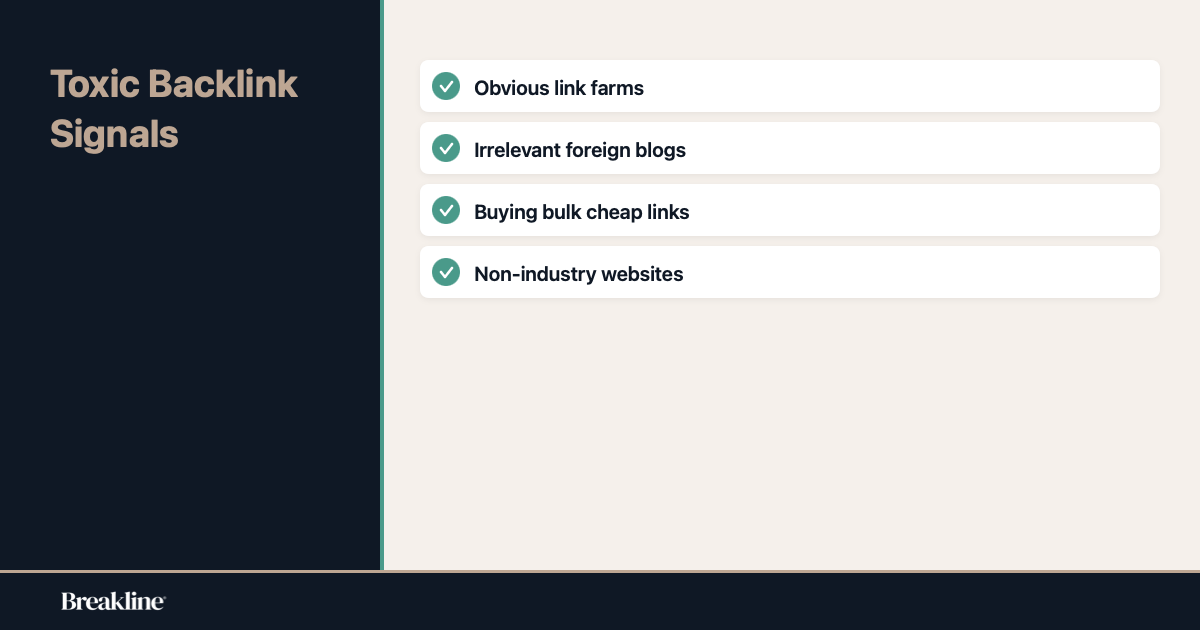
Let us talk about backlinks for a minute. A backlink is simply a link from another website pointing to your website. Search engines view these as votes of confidence. The more high quality votes you have the more authoritative your site appears. But not all votes are equal.
Ten years ago you could buy thousands of links from cheap directories and foreign blogs to game the system. Those days are long gone. Bad agencies still use these outdated tactics because they are lazy. They will build links from obvious link farms or completely irrelevant websites.
If you run a dental practice and you suddenly get a bunch of links from a blog about cheap car parts in another language, that is a massive red flag. Low quality links can actually harm your website. Search engines are smart enough to recognize spam patterns now.
If your agency is bragging about building fifty links a month for a few hundred quid, they are definitly buying trash. Quality always beats quantity. It is better to have three links from respected industry publications than a hundred links from spam sites.
Ignoring the technical health of your website
You can write the best content in the internet but if your website is broken behind the scenes nobody will ever see it. Technical health is the foundation of everything else. A lot of cheap agencies completely ignore this part because it requires actual development knowledge.
They will just pump out generic blog articles and ignore the fact that your website takes ten seconds to load on a mobile phone.
People are impatient. If your site is slow they will bounce back to the search results and click on your competitor. Your agency should be running regular technical audits. They need to check for broken links and duplicate content. They need to ensure that search engines can actually crawl and index your pages properly.
If they never mention technical improvements or site speed, they are only doing half the job. You cannot put lipstick on a pig and expect it to win a beauty contest. The underlying code of your website has to be clean & fast.
Poor communication and rotating account managers
This is perhaps the most frustrating issue for business owners. You sign a contract with a slick salesperson and then you are handed off to a junior account manager. Three months later that manager leaves and you are assigned to someone else. You have to explain your business all over again.
Consistency matters.
Search optimization is a long game and you need a dedicated specialist who actually understands your industry. When one person is trying to manage a hundred different accounts they simply cannot give your firm the attention it requires. Communication should be proactive. You should not have to chase your agency for updates.
They should be scheduling regular strategy calls to review performance and adjust tactics. The market changes. Your competitors change. The strategy needs to adapt. If they only send an automated PDF report once a month and never pick up the phone, they are not invested in your success. They are just collecting a retainer.
The Bottom Line
Finding the right partner takes time. There are a lot of snake oil salesmen out there but there are also plenty of hardworking professionals who genuinely care about growing your business. Trust your gut. If a promise sounds too good to be true it probably is.
Pay attention to how they communicate with you during the sales process because that is usually as good as it gets. I always tell people to ask tough questions. Ask them what happens if things do not go according to plan.
A good practitioner will admit that setbacks happen and explain how they pivot. A bad one will just blame the algorithm and ask for more money.
Take your time. Demand transparency. Your business deserves nothing less.