The Real Cost of Ignoring SEO for Your Small Business

Ignoring SEO means handing your best local customers directly to your competitors because 96 percent of people find nearby businesses through online search. You lose the traffic and you lose the trust. People simply assume the business at the top of Google is the best one.
That is the blunt reality.
When someone needs a roofer to fix a leak or a solicitor to handle a contract they pull out their phone. They type a few words. They click the first credible option they see. If your website is buried on page two you effectively do not exist to them.
Small Business SEO is mostly about making sure you show up exactly when someone is ready to buy. It captures people at the exact moment they need your help.
The invisible cost of doing nothing
Every day your website sits unoptimized is a day you bleed potential revenue. I think a lot of business owners assume SEO is some optional luxury. It really is NOT.
Think about a local dentist clinic. A new family moves to town & needs checkups. They search for local clinics. The competitors who invested in their Search Engine presence get the calls. You get absolute silence.
The cost is not just the lost appointment.
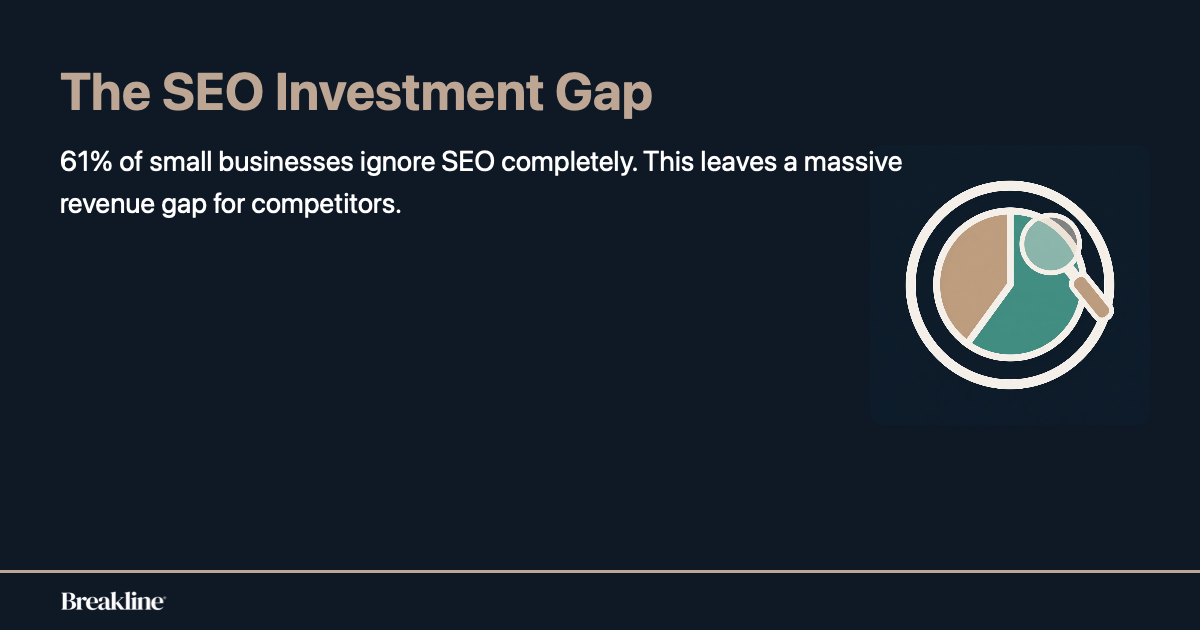
It is the lifetime value of that entire family over ten years. Around 61 percent of small businesses ignore SEO entirely according to recent industry data. That leaves a massive gap for the taking in almost every local market. The 39 percent who do invest are quietly scooping up all the high intent traffic.
High intent just means people who are actively trying to spend money right now. Those numbers sting when you finally see them.
Why paid ads drain your budget
So you might think you can just buy your way to the top with Google Ads. That works for a while. You pay for clicks and you get some traffic.
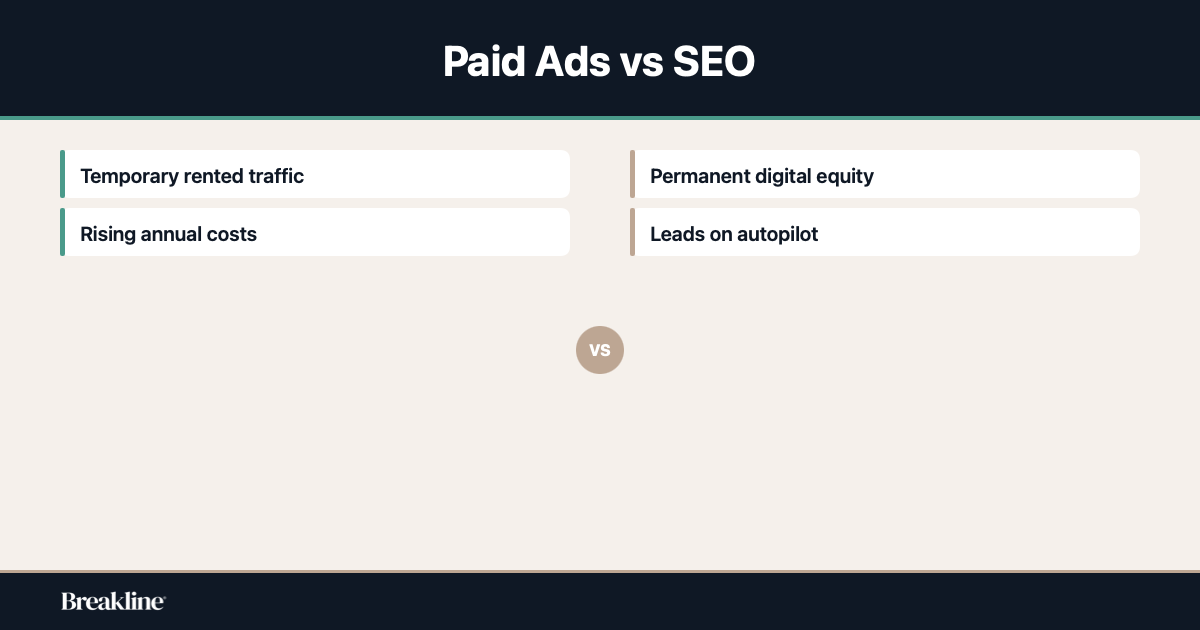
But the second you stop paying the traffic drops to zero.
It is like renting a house versus buying one. Paid ads require constant cash to keep the lights on and the phone ringing. Organic search builds permanent equity over time. I see so many folks burning through marketing budgets trying to outbid massive companies with endless resources.
It seems completely unsustainable for a small operation. You need to accomodate for rising ad costs every single year.
Search engine optimization actually gets cheaper over time. The initial work takes effort. You fix the website structure. You write better content. After about six to twelve months that foundation starts generating leads on autopilot.
How Google Business Profiles actually work
A lot of people ask me why their business does not show up on Google Maps. The answer usually comes down to a neglected Google Business Profile. This is the free listing that shows your map pin and opening hours. It needs to be filled out completely.
A profile with accurate information gets seven times more clicks than a half empty one.
People want to see photos of your work. They want to know you are open on Tuesdays. If you leave the profile bare Google assumes you are not a reliable result to show its users.
The map pack is clicked by most users in local searches. Getting in there requires consistency.
Your name and address and phone number must perfectly match what is on your website. Small details make a huge difference here. I remember a client at Breakline who had a different phone number on their Facebook page compared to their website. It confused the search crawlers entirely. We fixed that one detail and their map rankings jumped within weeks.
The power of a complete listing
Search engines crave certainty above all else. They want to know exactly who you are and what you do.
Adding high quality photos of your team builds that certainty. Updating your holiday hours prevents frustrated customers from showing up to a closed shop. These tiny administrative tasks compound into a massive competitive advantage.
You would be amazed how many local businesses simply forget to verify their address.
The mobile search reality
People do not sit at desktop computers to find a local service anymore. They are standing in their kitchen with a broken pipe searching on their phone. Over 84 percent of local searches happen on mobile devices.
If your website takes ten seconds to load on a phone they will hit the back button.
They will go to the next plumber on the list. Mobile optimization means your site is fast and easy to read on a small screen. The buttons need to be big enough to tap with a thumb. Four out of five mobile searches lead to a purchase within hours.
That is an incredible conversion rate. You miss all of that if your site requires users to pinch and zoom just to read your phone number.
Google actually indexes the mobile version of your site first now. They judge you entirely on how you look on a smartphone screen. A clunky desktop site is basically useless in this environment. I have seen beautiful websites fail completely because they broke on an iPhone. You have to test your own site on your own phone regularly. It is the only way to know what your customers actually experience when they try to hire you.
Trust signals and why reviews matter
We need to talk about trust. Search engines want to recommend businesses that will not provide a terrible experience. They look for signals that prove you are legitimate.
Why would anyone trust a business with no public track record?
Highly rated businesses with four or more stars outrank lower rated ones by a solid margin. It makes perfect sense when you think about it from a user perspective. Google wants to keep its users happy and coming back for more searches. Sending them to a one star solicitor makes Google look bad.
You have to actively ask your happy clients to leave reviews. And you have to reply to ALL of them.
Handling the negative feedback
Enterprise locations that respond to a third of their reviews see massively higher conversion rates. It shows you actually care about feedback. I always tell folks to reply to the negative ones too.
A calm and professional response to a crazy complaint proves you are the reasonable one.
Potential customers read the bad reviews first anyway. They want to see how you handle conflict. If you apologize and offer a solution you win their trust. Ignoring bad reviews just makes you look guilty.
Artificial intelligence changes the game
Things are shifting fast with artificial intelligence. You have probably noticed those AI summaries popping up at the very top of your search results recently.
Google shows these overviews for more than half of all queries now.
This means traditional click metrics are getting messy. People might get the answer they need right from the search page without ever clicking your link. You have to focus on building genuine authority so the AI cites your business as the source. It is a seperate challenge from old school keyword stuffing.
The algorithms look for Experience and Expertise and Authoritativeness and Trustworthiness. We call this ‘EEAT’ in the industry. You prove it by sharing real insights from your daily work.
A generic article about roof maintenance will not cut it anymore. You need photos of your actual team fixing a specific local roof problem. You need to explain the exact materials you used and why you chose them. That level of detail proves you are a real expert with genuine knowledge. AI cannot fake actual hands on experience no matter how advanced it gets.
Technical fundamentals you can not ignore
There is a technical side to all of this that scares people off. You hear words like “XML sitemaps” and website indexing and it sounds like absolute gibberish. It is actually fairly straightforward once you strip away the jargon.
A crawler is just an automated bot that reads your website.
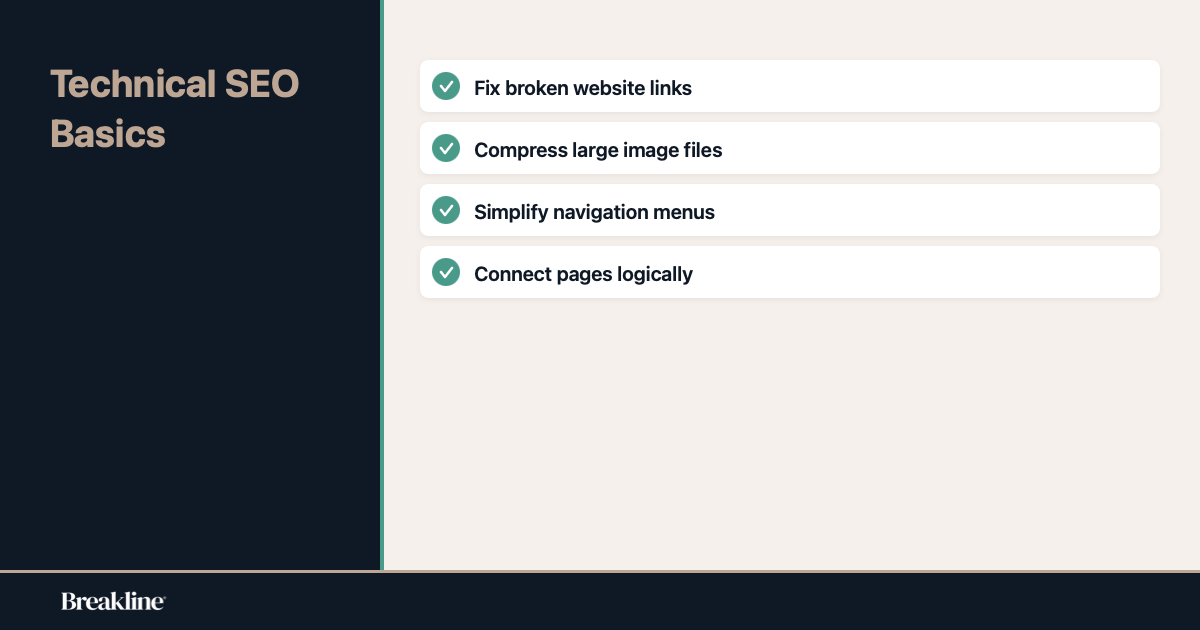
If your site is broken the bot gets stuck. It leaves without reading your content. You have to make sure your pages link to each other logically. A messy navigation menu confuses both the bots & your human visitors.
Fixing broken links is like sweeping the floor of your shop. It is basic maintenance that keeps things running smoothly.
Page speed is another massive factor here. Large image files will slow your site down to a crawl. You have to compress those photos before you upload them. A fast site keeps people engaged longer. Search engines notice when people stay on your site instead of bouncing away immediately.
Getting started without the overwhelm
You do not need to fix everything by tomorrow morning. Small business SEO is a marathon.
Start with the absolute basics. Claim your map listing. Make sure your website actually mentions the town you operate in. I bought a coffee machine last week that had fifty buttons and I only use one.
Software tools can be like that too.
Ignore the complicated SEO software for now. Just focus on answering the questions your customers ask you every day. Write down the top ten questions you get on the phone.
Focus on answering questions
Create one page on your website for each of those questions. Answer them clearly and honestly.
That simple strategy builds more relevance than spending thousands on sketchy link building schemes. People search for solutions to very specific problems. If you provide the best answer you win the traffic.
Consistency beats intensity every single time.
Building local authority
You also need other local websites to talk about you. We call these backlinks. Getting a link from the local chamber of commerce or a neighborhood blog is incredibly valuable.
It proves you are an active part of the community. Search engines view these links as votes of confidence.
You do not need thousands of them. A handful of high quality local links will push you past most of your competitors very quickly. Sponsoring a local little league team often gets you a link from their website. It is good marketing and good SEO at the exact same time.
The Bottom Line
I have watched this industry change a lot over the last fifteen years. The tactics shift but the core truth stays exactly the same. People use search engines to solve their problems.
If you are not showing up you are making it incredibly hard for people to give you their money.
It takes a few months to see the needle move. The waiting is always the absolute hardest part for new clients. But once that organic traffic starts flowing it completely changes how a business operates on a daily basis. You stop stressing about where the next job is coming from.
The upfront effort pays off quietly for years. That peace of mind is what you are really building.