
Local SEO
New York Local SEO Strategies To Boost Rankings & Leads
How to win New York local search: fix your Google Business Profile, build neighborhood pages, clean up listings, earn local links and manage reviews.
 By Alexander Thomas, Founder Updated 9 min read
Key takeaways
- Fill out every field of your Google Business Profile, including categories, service zones and real photos, and post offers or recent projects.
- Build dedicated pages with unique, useful content for each neighborhood you want to work in, and win small pockets before whole boroughs.
- Keep your name, address and phone number identical across directories such as Yelp and YellowPages, and fix every error you find.
- Earn links from other New York websites by sponsoring local teams, joining business associations and partnering with other businesses.
- Make reviews easy to leave with a direct link, reply to every review, and track which pages bring in form submissions and phone calls.

On this page10 sections
Getting your business to show up in New York local search results requires claiming your Google Business Profile, building specific pages for different boroughs, fixing your directory listings, and earning links from other local websites.
You are probably searching for this because your website is stuck on page three while a competitor with worse reviews gets all the phone calls. I get it. It is frustrating to watch lesser businesses win just because they played the search engine game better than you.
New York is an absolute beast of a market. You cannot just target “NYC” and expect to win anything meaningful. A roofer in Queens is playing a completely different game than a cosmetic dentist in Manhattan.
The competition is incredibly dense and the budgets are massive. You do not need a massive budget to win though. You just need to be highly specific with your tactics.
I remember working with a Brooklyn retailer a few years ago who was completely obsessed with ranking for the whole city. We shifted their focus to hyper-local terms and their leads went through the roof. They are doing fantastic right now.
This environment requires a different approach. Enterprise companies and massive tech brands often push down the small local guys in the search results. We call this the Silicon Alley effect. Big brands dominate the top spots with massive authority. You beat them by being more relevant to the specific neighborhood than they could ever be.
Fixing your Google Business Profile
GBP Profile Essentials
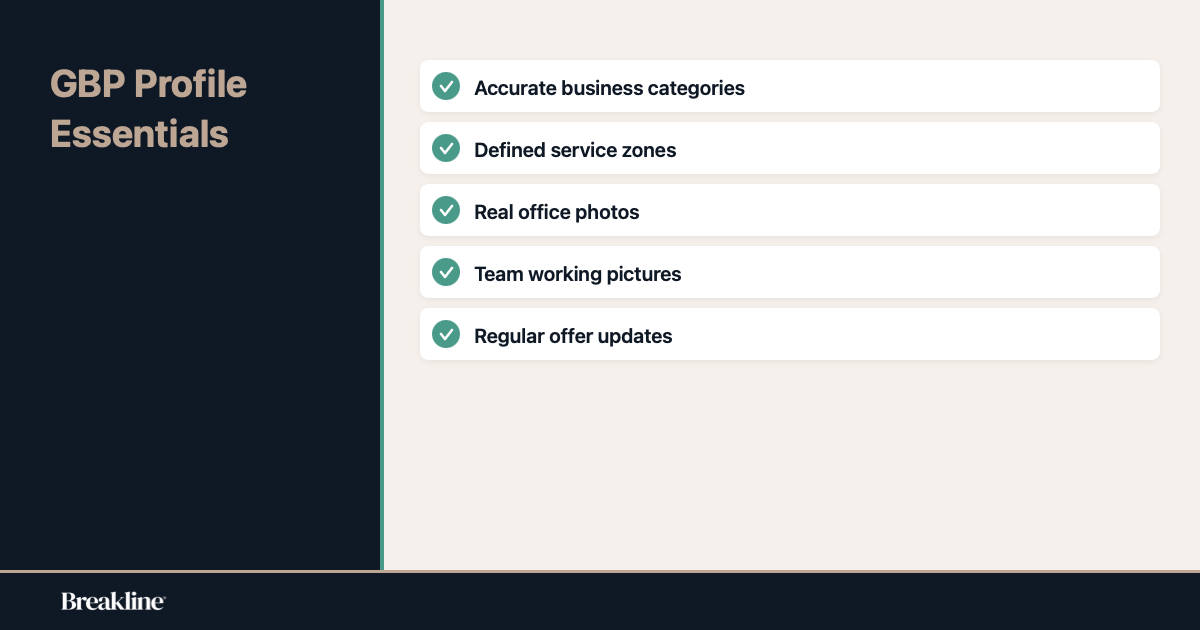
Let us start with the most obvious piece of the puzzle. Your Google business profile is the map listing that shows up at the top of search results. If you want to rank for New York Local SEO Strategies, or just get more phone calls for your plumbing business, this is where you begin. Fill out every single field available to you. Categories. Service zones. Photos. DO NOT leave anything blank.
It amazes me how many businesses skip this step.
I think they assume Google will just figure it out on its own. Google will not figure it out. You need to tell the search engine exactly what you do and where you do it. If you are a solicitor in Staten Island, say so explicitly. Upload real photos of your office and pictures of your team working. People want to see who they are hiring. A stock photo of a smiling person holding a gavel is not going to cut it. It makes you look fake.
Then there are the updates. Treat your GBP like a social media feed. Post offers or recent projects. It keeps the profile active and active profiles get more visibility. A lot of business owners complain about this part because they say they don’t have time. Make time. It is free advertising in the most expensive city in the country.
Why neighborhood pages actually work
Most websites have one generic services page. That is a massive mistake in a city with five boroughs and hundreds of distinct neighborhoods. You need dedicated pages for the specific places you want to work.
If you want jobs in the Upper East Side, build a page about your services in the Upper East Side. Talk about local landmarks. Mention the specific types of buildings you work on. A brownstone in Brooklyn needs different plumbing than a high-rise in Midtown. Make the content relevant to the person living there. Sometimes we use ‘geo-fencing‘ concepts to target these specific spots. It proves to the search engine that you actually operate in that exact location.
This is where things get interesting. I have seen home services companies hit the top three across all five boroughs just by doing this right. They created unique content for each spot. No copy and pasting. Real useful information. It takes time to write all that. I know you are busy running a business. This hyper-local approach captures people who are searching for things near them. They have high intent. They want to hire someone right this minute.
At Breakline we often tell clients to focus on the small pockets first. Win Astoria before you try to win all of Queens. Win Tribeca before you tackle all of Manhattan. It builds momentum.
Cleaning up your business details
Your Name Address & Phone number need to be identical everywhere on the internet. We call this NAP consistency. It sounds boring because it is boring. But it matters a lot.
Google looks at directories like Yelp and YellowPages and local chamber of commerce sites to verify you are a real business. If your address says “Suite 4B” on one site and “Apt 4-B” on another it causes confusion. Confusion leads to lower rankings. You need to audit your listings. Find every place your business is mentioned online. Fix the errors.
There are tools that do this automatically. Doing it manually ensures it is done perfectly though. I once spent three days fixing citations for a Manhattan clinic. It was tedious work. They had moved offices twice in ten years. The old addresses were still floating around the internet. Sometimes old directories cannot accomodate certain formatting so you have to get creative with how you input the data. Once we cleaned it up their map rankings spiked almost immediately. It was a good reminder that the basics still work.
Getting links from local websites
A backlink is just a link from another website pointing to yours. Think of it as a vote of confidence. The more votes you have the more Google trusts you. Not all votes are equal though.
Local Link Sources
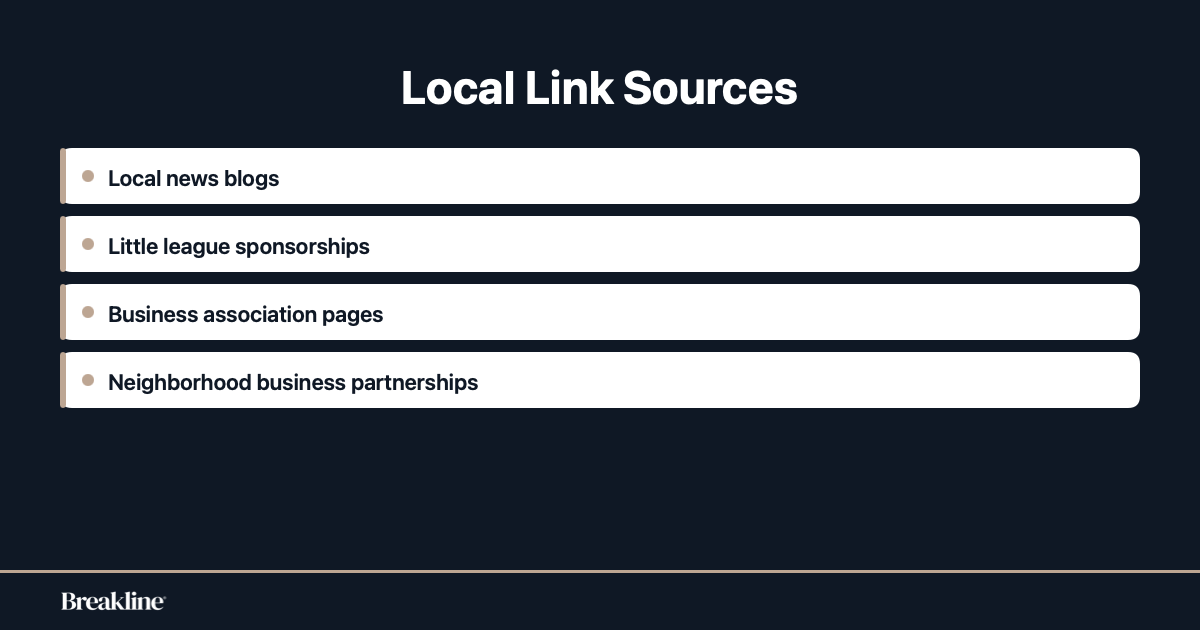
In New York you need links from other New York websites. A link from a local news blog in Queens is worth more to a Queens contractor than a link from a massive national site. It proves you are actually part of the community. How do you get them? Sponsor a local little league team. Join local business associations. Partner with other businesses.
If you are a plumber maybe you know a great electrician. You can link to each other. This takes actual human interaction. You cannot just buy your way to good local links. Well you can but it usually ends badly. Google is pretty smart about catching unnatural links. Building real relationships is safer and works better long term. I was walking down 5th Avenue last week and noticed how many small businesses support each other with window signs. You just need to do the digital version of that.
I think a lot of people overcomplicate this process. They look for secret hacks. There are no secret hacks. Just talk to people in your neighborhood and find ways to collaborate.
The technical stuff you cannot ignore
Your website needs to load fast and look good on a phone. Most of your customers are searching while walking down the street or sitting on the subway. If your site takes ten seconds to load they will hit the back button.
Google tracks this behavior. They call it Core Web Vitals. It is a fancy way of saying your site should not be annoying to use. Then there is schema markup. This is code you put on your website to help search engines process your content. You can use local business schema to explicitly state your coordinates and your opening hours and your reviews. It feeds data directly to the search engine in a language it prefers.
You might need a developer for this part. It is easy to break your site if you mess around with the code. It is definately worth the investment though. Sites with proper schema often get rich snippets in the search results. That means more real estate on the screen.
More real estate means more clicks. Every single time.
Why AI is changing local search
You have probably heard a lot of noise about artificial intelligence lately. It is everywhere. Search engines are using AI to give users faster answers. This changes how people find local businesses entirely.
Information Gain Defined
Instead of just looking for keywords on a page Google tries to process the semantic relationships between words. That is a technical way of saying it reads your site like a human would. It looks for context. If you are a contractor in Queens the AI wants to see proof that you actually know the district. It looks for mentions of local building codes or specific weather challenges in that part of the city.
This means generic content is dead. You cannot just hire someone cheap to write 500 words of fluff anymore. The search engines will ignore it. You need to provide real insight. We call this information gain. It means adding something new to the conversation that is not already on a hundred other websites. Share your actual experience on the job. Talk about the specific problems you solved for a client in Brooklyn last Tuesday.
I think this is actually great news for small businesses. It levels the playing field. You know your trade better than any AI copywriter ever could. Put that knowledge on your website.
Managing reviews without going crazy
The Authenticity Sweet Spot
Reviews are a massive ranking factor. You need a system for getting them consistently.
Do not just ask for reviews. Make it incredibly easy for the customer. Send them a direct link to your Google business profile. Text messages work better than emails for this. People read their texts. When you get a review you have to reply to it. Even the bad ones. Especially the bad ones.
How you handle a complaint in public tells future customers a lot about how you run your business. I see business owners argue with customers in the review section. It is a terrible look. Take a breath. Apologize for their experience and offer to take it offline. It shows you are professional. It shows you care. Google notices that you are actively managing your profile.
So here is the tricky part. You cannot incentivize reviews. Do not offer a discount for a five-star rating. It violates the rules. Just do good work and ask politely. A 4.8 rating actually looks more authentic than a perfect 5.0 anyway. People trust a business with a few minor complaints more than one that looks artificially perfect.
Tracking what actually brings in money
Ranking number one is useless if it does not generate revenue. You need to know where your leads are coming from.
Set up Google Analytics to track form submissions and phone calls. You can use call tracking software to see exactly which marketing channel made the phone ring. This data tells you where to put your effort. If you see that your Bronx location page is getting a lot of traffic but no calls you know the page needs better content. Maybe the phone number is hard to find. Maybe the page does not build enough trust.
Without tracking you are just guessing. Guessing is expensive in a market like New York. You need hard numbers to make good decisions. It might seem complicated at first but once the dashboard is set up it gives you incredible clarity. Mistakes are often made when business owners rely on their gut feeling instead of the data.
I check my clients numbers every single morning. It becomes an obsession. A healthy one.
Final Thoughts
Winning in local search takes patience. It is not a switch you flip.
It requires consistent effort over months. You have to build the pages and clean up the listings and get the reviews & earn the links. But the payoff is huge. When you dominate your local district you stop relying on expensive ads. You build a sustainable source of leads.
I have watched businesses completely transform their revenue just by getting these basics right. It is entirely possible for you too. Just start with one thing. Fix your profile this afternoon. Write one new page tomorrow. Keep moving forward. The businesses that win in New York are the ones that simply refuse to give up on the boring details.
Frequently asked questions
Why should a New York business target neighborhoods instead of the whole city?
New York is a dense market, and you cannot just target NYC and expect to win anything meaningful. Big brands dominate the top spots with massive authority, so you beat them by being more relevant to the specific neighborhood than they could ever be. Win Astoria before you try to win all of Queens, because it builds momentum.
What should a neighborhood page include?
Describe your services in that place, talk about local landmarks and mention the specific types of buildings you work on. A brownstone in Brooklyn needs different plumbing than a high-rise in Midtown. Write unique content for each page, with no copying and pasting, so it is relevant to the person living there.
Why do business details need to match across directories?
Google looks at directories such as Yelp, YellowPages and local chamber of commerce sites to verify you are a real business. If your address is written one way on one site and another way elsewhere, it causes confusion, and confusion leads to lower rankings. Audit your listings, find every place your business is mentioned online and fix the errors.
Which local links help a New York business most?
Links from other New York websites help most: a link from a local news blog in Queens is worth more to a Queens contractor than one from a massive national site. You can earn them by sponsoring a local little league team, joining local business associations and partnering with other businesses. Buying links usually ends badly, because Google is pretty smart about catching unnatural links.
What does schema markup do for a local business website?
Schema markup helps search engines process your content, and local business schema lets you explicitly state your coordinates, opening hours and reviews. Sites with proper schema often get rich snippets in the search results, which means more space on the screen and more clicks. You might need a developer, because it is easy to break your site if you mess around with the code.
How does AI change the content a local business should publish?
Google tries to process the semantic relationships between words and looks for context, such as proof that you actually know the district you work in. Generic content will be ignored, so you need to provide information gain: something new that other websites do not already say. Share your actual experience on the job and the specific problems you solved for clients.
How should a business respond to a bad review?
Reply to it, because how you handle a complaint in public tells future customers a lot about how you run your business. Do not argue with the customer in the review section. Take a breath, say sorry for their experience and offer to take it offline, which shows you are professional and that you care.
Further reading
- NAP consistency in local SEO, Moz
- Geofencing in local SEO, Ameya Digital
- Google Analytics, Google
- Local Consumer Review Survey 2026, BrightLocal