How to Optimize for ‘Near Me’ Searches?

To rank for ‘near me’ searches you need a complete and accurate Google Business Profile. Fill out every single field exactly as your business operates locally and upload fresh photos weekly.
I think people overcomplicate this stuff all the time. You run a roofing company in Manchester or a dental practice in Leeds. Someone pulls out their phone with a cracked tooth or a leaking roof and they search “emergency dentist near me”. Google just wants to show them the closest legitimate option that actually answers the phone.
If your profile is empty or confusing they skip you.
They want certainty. They want to know you are open right now. It really is that basic. When a potential client is standing in their kitchen with a burst pipe they are not reading your entire website history. They look at the map pack at the top of the search results and hit the call button. If you want to be the business they call you have to play by the rules of local search.
Why local search intent matters
Almost half of all Google searches have local intent now. People are walking around with smartphones looking for immediate solutions. If they need a solicitor to handle a family law issue they want someone nearby.
A fully optimized profile gets significantly more clicks to your website. It is a massive difference. We see businesses getting seven times more clicks just because they bothered to fill out their opening hours and add a logo.
That said it is not magic. You cannot just trick the algorithm into thinking you are everywhere. You have to prove you exist where you say you do.
I remember working with a local plumber a few years ago who thought he could rank in central London while living out in Kent. He set up this whole fake address situation. It does not work like that anymore. Google knows where the searcher is standing and they know where your office actually is. The system caught on and suspended his listing within a month. I had to spend weeks helping him appeal it and get his real local listing back online.
It was a nightmare. Just play it straight.
When someone searches for a “roofer near me” the search engine looks at their GPS location. It then scans the database for roofers within a few miles. If your profile is fully fleshed out with photos and reviews you jump to the front of the queue.
Verifying your business profile
Before you can do any of this optimization you have to actually claim and verify your profile. Search for your business in the Google Business Profile Manager. If it is there claim it. If it is not create a new one.
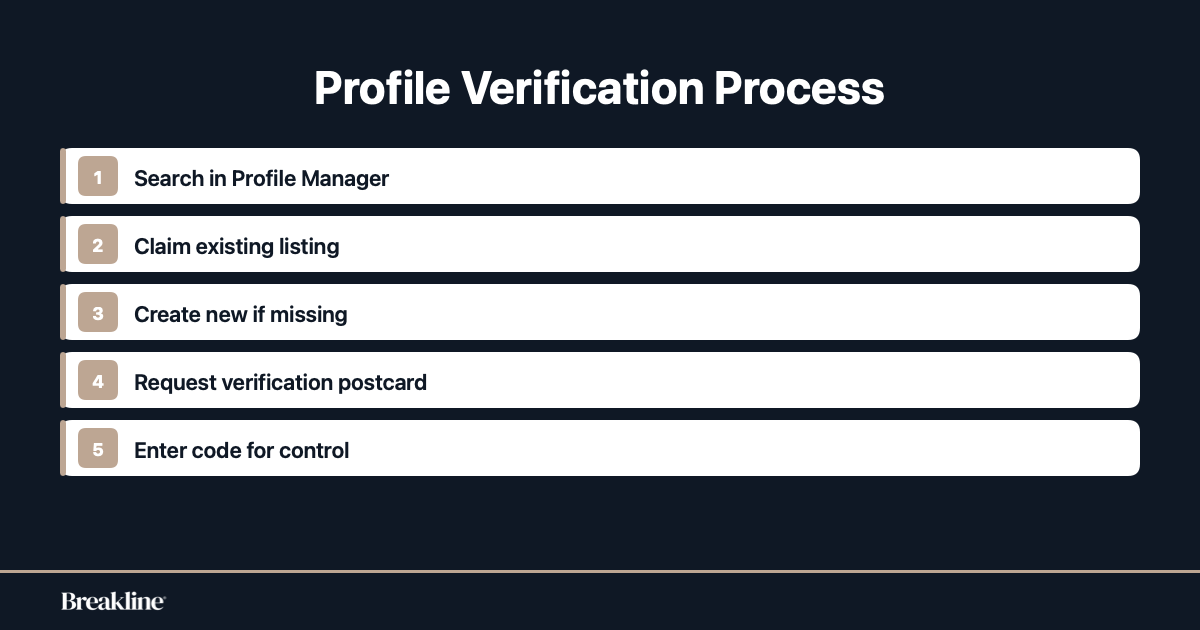
Verification usually involves getting a postcard sent to your physical address with a code on it. Sometimes you can verify by phone or even instantly if your business is already known to the system.
Do NOT skip this step.
An unverified profile is basically invisible. I have seen business owners wait weeks for a postcard and then accidentally throw it away thinking it was junk mail. Keep an eye out for it. Once you enter that code you have full control over your listing.
Getting your primary category right
Your primary category is the single biggest signal you can send to Google. It tells them exactly what you do. If you are a deck builder in Richmond you need to select that specific category.
Do not guess what your category should be. Look at the competitors who already rank when you search for your services. There are tools out there that show you exactly what categories the top guys use. Match them.
You can add up to nine subcategories too. This is where you accomodate all the other services you provide. A dentist might have ‘Cosmetic Dentist’ and ‘Dental Clinic’ as secondary options.
Just don’t stuff categories you don’t actually do.
If you run a bakery do not list yourself as a restaurant just to get more views. It backfires. People show up expecting a full dinner menu and leave a one star review when they only find cupcakes.
Using services and products features
There is a section to list your specific services and products. Use it. If you offer emergency dental repairs list it as a service with a clear description and a starting price.
This gives the search engine more text to read. More text means more context. When someone searches for a specific service your profile has a better chance of showing up if you have explicitly listed it.
Keep your name and address exact
The name on your Google Business profile must match the sign above your door. It really is that simple.
Some marketing agency probably told you to add keywords to your business name. Something like “Smith & Sons Roofing Manchester”. Do not do this. Adding location names or random keywords to your business title is considered spam by Google.
They will suspend your profile without a second thought.
Your name & address and phone number need to be perfectly accurate. If you are a mobile business like a mobile dog groomer you need to define your service locations explicitly. Tell the system exactly which towns you travel to.
This ensures you show up when someone in those specific towns types “dog groomer near me”. If you leave it blank the algorithm has no idea where to place you on the map.
Consistency is what builds trust. If your phone number changes make sure you update it immediately. Nothing frustrates a customer more than calling a dead number.
Writing a description that actually works
You get 750 characters for your business description. Use them wisely.
Put the most important information right at the front. Who you are and what you do and where you do it. “We are a family run roofing company serving Manchester roofs for twenty years.” That is the kind of natural language that works.
Keywords should appear organically in your text. Do not just list ‘roof repair near me’ five times. Write like a normal human being explaining your business to a customer on the phone. Explain your services clearly.
I often see descriptions that sound like a corporate brochure. Nobody wants to read that. They just want to know if you can fix their problem.
Keep sentences short. Break up the text. Make it easy for someone skimming on a mobile phone while standing in the rain. Think about the questions your customers ask when they first call you. Answer those questions in the description. If you offer free quotes mention it. If you have parking available mention it.
Uploading photos and posting updates
This is where most local businesses drop the ball completely. They upload a blurry photo of their van in 2018 and never log in again.
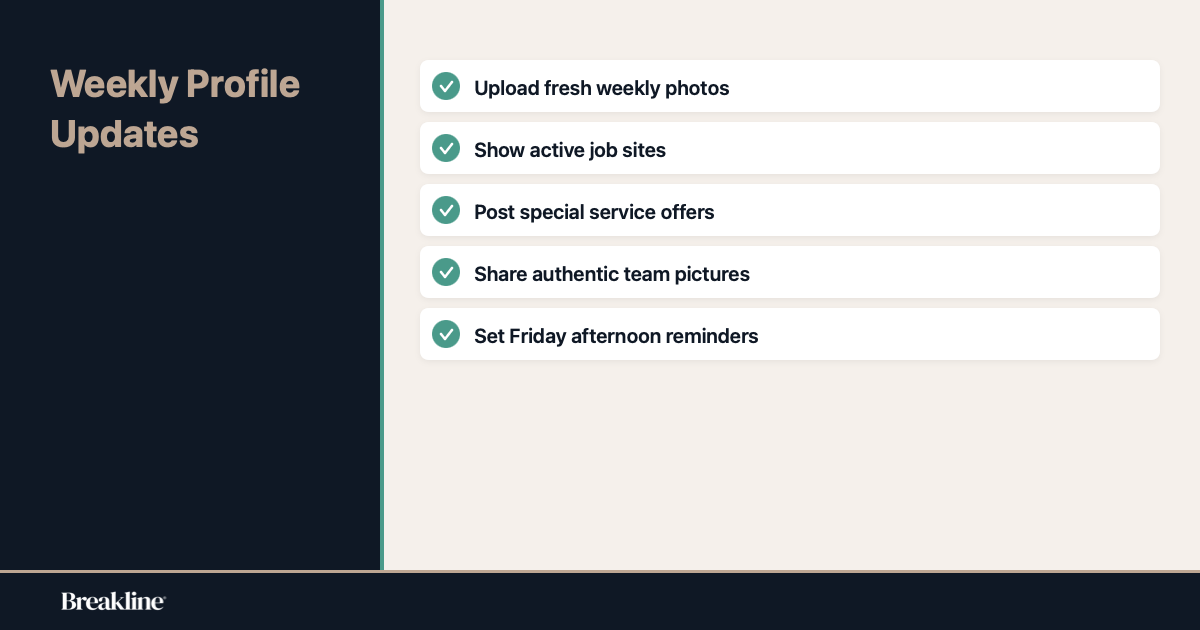
You need fresh visuals. Profiles with photos get way more direction requests and website clicks. Upload new photos weekly to signal activity to the algorithm. Show your team working on a job. Show the finished product. Show the front of your building so people know what to look for when they drive past.
Google Posts are also incredibly useful. Think of them like social media updates but they actually help your local SEO. Post about special offers or new services you provide.
Profiles that post weekly see a noticeable bump in engagement. It shows you are an active business that cares about communicating with customers.
You don’t need a professional photographer. Just snap a quick picture on your phone after finishing a job. Authenticity wins over polished stock photos every single time. I always tell clients to set a reminder on their phone for Friday afternoons. Take five minutes to upload one photo and write one short post. It is a tiny investment of time that pays off massively.
Getting reviews and answering questions
Reviews are critical for “near me” searches. They prove to Google that real people use your services and like them.
You need to ask every single happy customer for a review. Make it part of your process. Send them a direct link after the job is done. When they leave a review ask them to mention what service you provided and where. A review that says “Great emergency dental repair in Leeds” is worth its weight in gold.
Then you have to respond to them. Every single one. Use keywords naturally in your responses. “Thanks for trusting us with your emergency dental repair John.” It shows you are active and it adds more context to your profile.
There is also a Q&A section on your profile. Do not wait for customers to ask questions. You can literally ask and answer your own questions.
Put your most common FAQs right there on the page. It saves time and helps the algorithm understand exactly what you offer. If someone asks a question and you don’t answer it anyone else on the internet can answer it for you. You do not want random strangers answering questions about your business. Take control of the narrative.
Staying consistent across the web
Google does not just look at your own profile. They check the rest of the internet to make sure you are who you say you are.
Your business name address and phone number need to be identical everywhere. We call this NAP consistency. If you are listed on Yelp or local directories the information must match your Google profile exactly.
If your phone number is different on an old directory from five years ago it confuses the search engines. They hate confusion. They will just rank the guy down the street who has his details sorted out definetely.
Spend an afternoon cleaning up your online citations. It is boring work but it pays off.
There are services that can do this for you if you don’t have the time. But it is crucial that the foundation is solid. Think of every mention of your business online as a vote of confidence. If the details match the vote counts. If the details conflict the vote is thrown out.
The rise of mobile searches
We have to talk about how people actually search. Almost everyone uses their smartphone for “near me” queries.
This means your profile needs to look good on a small screen. When someone searches for a roofer near me they are probably standing outside looking at a leak. They want a phone number they can tap immediately.
If your profile is cluttered or missing a phone number they will just scroll to the next guy.
Speed matters too. If someone sends you a message through your profile you need to reply fast. The system tracks your response time. If you ignore messages it hurts your visibility.
Make sure your website is mobile friendly too. If they click through from your profile and your website takes ten seconds to load on a phone they are gone.
Tracking results and making tweaks
You cannot just set this up and walk away. You have to monitor how things are going.
The insights tab on your profile tells you exactly how people are finding you. Are they searching for your brand name or are they searching for ‘solicitor near me’. You can see how many people clicked to call you or asked for directions.
If you notice a drop in calls maybe it is time to upload some new photos or push for a few more reviews. It is a constant process of tweaking and adjusting based on what the data tells you.
Don’t obsess over daily fluctuations. Look at the trends over a month or a quarter.
If you are consistently getting more direction requests you are doing something right. Just keep feeding the profile with fresh information. Sometimes a small change like adding a new subcategory can cause a big spike in traffic. You just have to test things and see what happens.
Final Thoughts
Getting local search right is mostly about proving you are a reliable active business. It takes a bit of effort upfront but it becomes a habit quickly.
I see so many business owners stressing over complicated SEO tactics when they haven’t even filled out their opening hours properly. Get the basics right first. Be honest about where you are and what you do.
It really comes down to trust. If you show up consistently and provide clear accurate information the search engines will reward you.
Just keep at it. Don’t expect overnight miracles but trust that doing the simple things well will bring you more local customers. It is not about outsmarting the system. It is about being the most helpful and transparent option in your local market.