AI Search Optimization Tips For 2026

AI Search Optimization is the process of structuring your website’s content so that artificial intelligence engines like Google’s AI Overviews, ChatGPT, and Perplexity can understand, verify, and cite your business as the answer to a user’s question.
It is less about ranking first on a list of blue links and more about being the single trusted source that the AI summarizes for the user.
If you run a local business or a service company, this means shifting your focus from keywords to providing direct, authoritative answers that a machine can easily read.
I have watched the search industry shift and change for over fifteen years now. I remember when putting white text on a white background worked.
I remember the panic when mobile became a priority. But this shift to AI feels different because it changes the fundamental reason people search.
They don’t want a list of websites anymore. They want the answer right now.
And if your site doesn’t give it to the machine clearly, the machine will ignore you.
Stop chasing keywords and start answering questions
For years we have been obsessed with keywords. We tracked them. We stuffed them into headers.
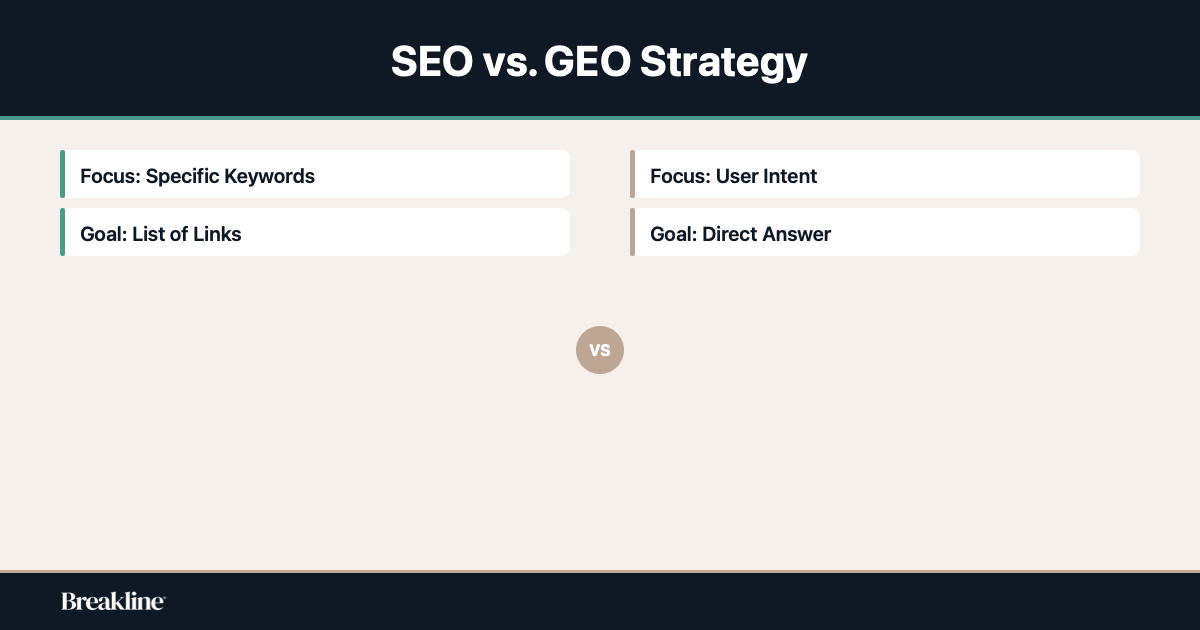
We prayed to the algorithm gods that “emergency plumber bristol” would get us the phone call. That doesn’t work the same way in 2026.
Generative Engine Optimization, or GEO as the industry calls it, requires a different approach. You have to think about intent.
When someone asks an AI a question, they are usually looking for a specific solution to a problem. They aren’t just browsing.
Think about it this way. If you are a dentist, don’t just write a page about “teeth whitening”. That is too broad. The AI sees a million pages like that.
Instead, answer the specific questions people are too embarrassed to ask a human but will happily type into a search bar. “Why do my teeth hurt after whitening” or “how much does composite bonding actually cost in 2026”.
The AI is looking for semantic depth. It wants to see that you understand the topic fully.
It isn’t enough to mention the service. You have to explain the process, the risks, the costs, and the aftercare.
Spinutech suggests shifting your mindset entirely from ranking to answering. I think they are right.
It seems obvious when you say it out loud. But you would be surprised how many business websites I see that are just digital brochures with no real information.
Why your site might be invisible to AI
This is the boring technical part that everyone wants to skip. Please don’t.
If the AI bots cannot crawl your site efficiently, you do not exist to them.
ROI Revolution points out that technical accessibility is the first hurdle. If your site is slow, or if you have accidentally blocked bots in your robots.txt file, the AI will just move on to your competitor.
It has no loyalty. It wants the path of least resistance.
I had a client recently, a lovely guy running a roofing firm. He had all this great content. Videos, guides, the works.
But his site took six seconds to load on a mobile phone. The AI simply wasn’t waiting around to read his wisdom. We fixed the speed, and suddenly he started appearing in the summaries. It really can be that simple sometimes.
You also need to look at your site structure. Is it logical? Does one page link naturally to another?
AI uses these links to understand the relationship between topics. If your site is a mess of orphaned pages with no internal links, the AI can’t build a complete picture of your expertise.
The Princeton study you need to know about
There was some fascinating research out of Princeton recently that really put numbers to what we suspected.
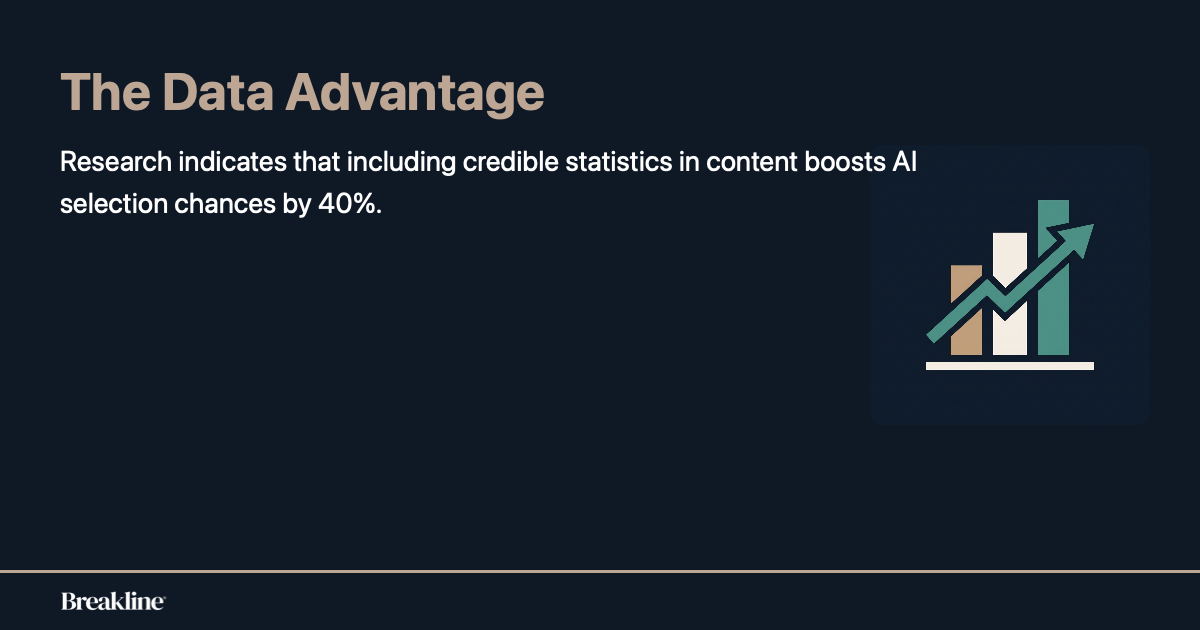
They found that Generative Engine Optimization tactics could improve a site’s chances of being selected by an AI by 40%.
That is a massive number. In this game, even 5% is something we celebrate.
So what did they say works? Statistics.
Adding relevant, credible statistics to your content was one of the highest-performing strategies. It makes sense if you think about it.
AI models are built to predict the next word, but they crave facts to ground their hallucinations. If you provide hard data, you become a stable anchor for the model.
Citations matter too. If you make a claim, back it up. Link to a government study or a manufacturer’s manual.
It shows the AI that you aren’t just making things up. It signals authority.
This study also highlighted that AI prioritizes structured content. It hates walls of text.
It loves bullet points, numbered lists, and clear headings. It wants to be able to parse the information without working too hard.
Format your content for machines
You need to make your content easy for a machine to digest. This is where many businesses fail.
They write long, winding narratives that bury the lead.
Lead with the answer. I cannot stress this enough. If the question is “how long does a boiler service take”, the first sentence of your paragraph should be “A standard boiler service takes between 30 and 45 minutes.”
Don’t start with “In the modern age of home heating, it is important to consider…” No. Stop it.
The AI will skip that fluff. Give the direct answer first, then explain the nuance afterwards. This is often called the inverse pyramid style in journalism, and it is perfect for AI Search Optimization.
Use Schema markup. I know, technical term. But it’s basically just a way of labelling your code so the search engines know exactly what it is.
You can use Schema to tell Google “this is a video”, “this is a recipe”, or “this is a FAQ”. It’s like putting a sticky note on your content for the robot.
Tools like Surfer SEO can help you analyse your content structure. They look at the top-performing pages and tell you exactly what terms and headings you are missing. It takes the guesswork out of it.
Building trust and authority signals
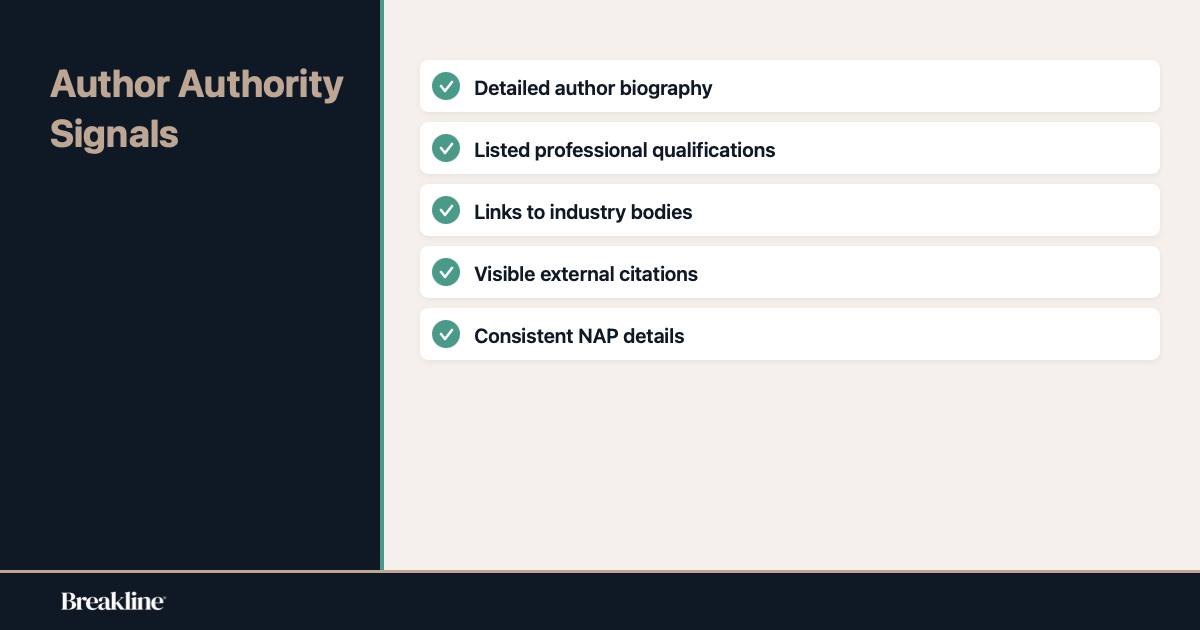
Google has these signals they call E-E-A-T. Experience, Expertise, Authoritativeness, and Trustworthiness.
It used to be a guideline for human raters, but now it is baked into the AI’s selection process. leaked documents have hinted at an “authorReputationScore”.
This means you need to show your face. If you are a solicitor, have a bio page that lists your qualifications, your years of practice, and the professional bodies you belong to.
Don’t hide behind a generic “admin” author tag.
The AI wants to know who is speaking. Is it an expert? Or is it a content farm?
Pilot Digital highlights that semantic completeness and author reputation are key for AI citation. If you have been quoted in local news or industry journals, make sure those connections are visible.
I suspect this is why some small businesses struggle. They are modest. They don’t want to brag.
But in 2026, you have to brag a little bit. You have to prove you know your stuff.
Multimodal search is huge right now
We used to just search with text. Now we search with images and voice. We point our phones at things and ask “what is this”. This is multimodal search.
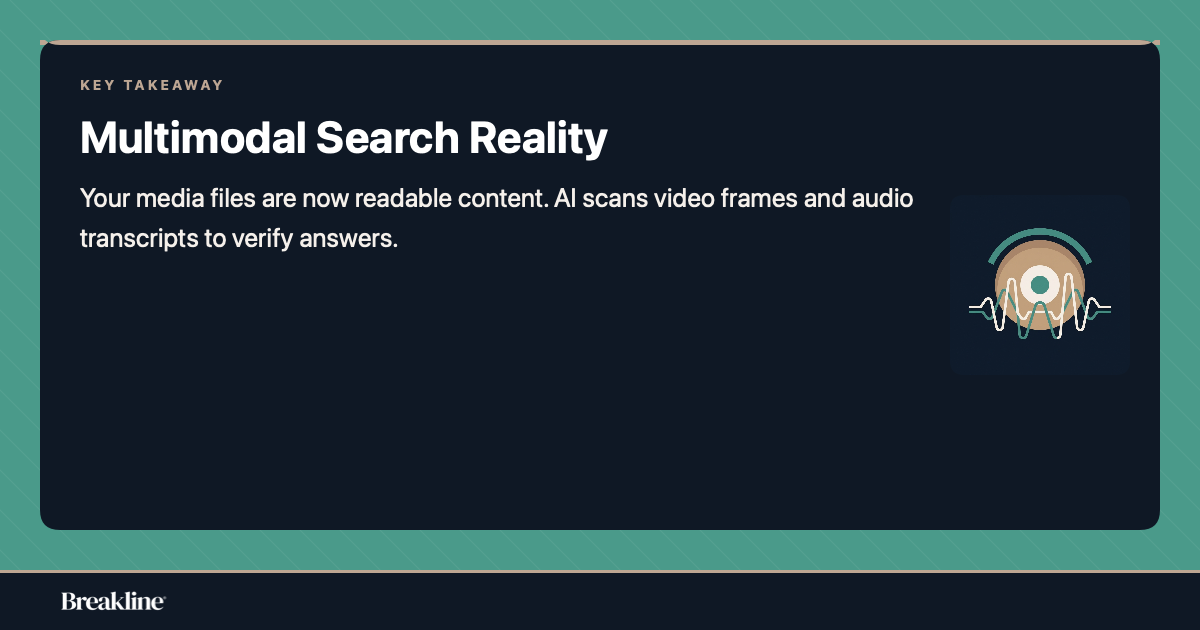
For a business owner, this means your images and videos are now SEO assets. AI can “see” what is in your photos. It can “listen” to the audio in your videos.
Let’s go back to that roofer example. Imagine he films a video on a customer’s roof. He points to a cracked lead flashing and explains why it’s leaking.
He uploads that to YouTube. But he doesn’t just leave it there. He adds a transcript. He uses a clear title.
Now, when someone asks an AI “how to fix leaking lead flashing”, the AI can actually scan his video, find the exact frame where he explains the fix, and serve that to the user. It is incredible technology.
Don’t ignore audio either. If you have a podcast or even just audio clips on your site, get them transcribed.
Text is still the easiest thing for AI to index, so give it a text version of everything.
Tools that actually help you
There are a million tools out there promising to solve your AI woes. Most are rubbish. You only need a few solid ones.
Semrush is still the heavyweight for keyword research and tracking. They have adapted well to the AI changes. You can use it to find those question-based keywords I mentioned earlier.
For the actual writing and optimization, I quite like Frase or the previously mentioned Surfer.
They help you build outlines that cover a topic comprehensively. They ensure you aren’t missing any obvious subtopics that the AI expects to see.
If you are technically minded, Ahrefs is brilliant for looking at backlinks and seeing where your competitors are getting their authority from. But be warned, it can be a bit overwhelming if you just want a quick answer.
You might also want to look at tools that help you audit your site independantly. Sometimes you need a fresh set of eyes, or rather, a fresh set of code, to spot the errors you have become blind to.
Monitoring your reputation
You need to know what the AI is saying about you. This is a new kind of reputation management. It isn’t just about checking Yelp reviews anymore.
Go to ChatGPT. Go to Gemini. Ask them about your business. “What does [Your Business Name] do?” or “Is [Your Business Name] reliable?” See what comes back.
If the answer is “I don’t have enough information”, you have work to do. You need to build more citations across the web.
Get listed in directories. Get mentioned in local press. Create more content that defines who you are.
If the answer is negative, you need to address the source of that data. AI pulls from the web.
If there is a lot of negative sentiment out there, the AI will reflect that. You can’t just delete it, but you can drown it out with positive, accurate information.
Consistency is vital here. Ensure your business name, address & phone number are exactly the same everywhere. Confusion kills authority.
Don’t ignore the paid side
I know we are talking about organic search here, but the lines are blurring. By 2026, AI search has merged organic and paid results in ways we didn’t expect.
Sometimes the best way to get data into the AI is to run ads. It sounds counter-intuitive for an SEO guy to say that.
But ad platforms give you structured ways to input product data, prices, and images. Google’s merchant center, for example, feeds directly into the knowledge graph.
If you are running an e-commerce store, agentic commerce is becoming a reality. This is where AI agents actually handle the purchase for the user. “Buy me a pair of running shoes under £100”.
If your product data isn’t pristine, the agent can’t buy from you.
So, keep an eye on your paid strategy. It might be feeding your organic visibility more than you realise.
Final Thoughts
It is easy to get overwhelmed by all this. Generative Engine Optimization, multimodal search, agentic commerce. It sounds like a lot of noise.
But when you strip it all back, the goal hasn’t really changed. You are trying to help a customer solve a problem.
The only difference is that now there is a very smart, very literal machine sitting between you and that customer.
You have to speak the machine’s language so it can translate your value to the human. That means being clear. Being accurate. Being fast. And proving that you know what you are talking about.
Don’t try to trick the AI. It is smarter than the old algorithms. Just be the best answer. Be the most helpful resource in your specific niche.
Whether you are a roofer in Leeds or a dentist in Dubai, there is space for you if you are willing to share your expertise openly. Start with one page. Fix one answer. Add one video. It all adds up.