Do I need SEO if I already run Google Ads?
Yes you absolutely need SEO even if you are already running Google Ads. If you stop paying for ads tomorrow your traffic drops to zero instantly. SEO is the only way to build an asset you actually own rather than renting space on a search results page forever.
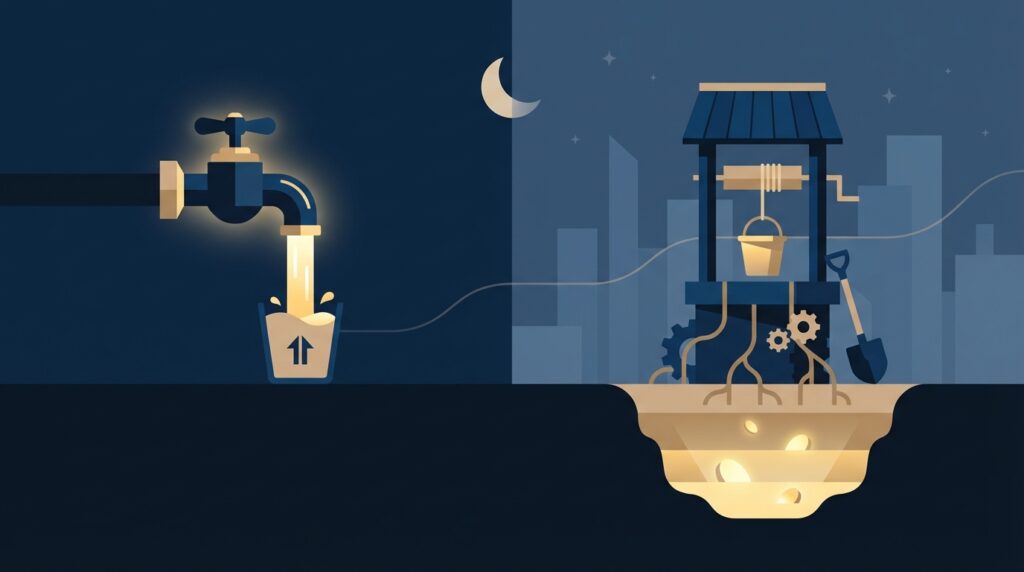
Think of it like this. Google Ads is a tap. You turn it on and water comes out immediately. You turn it off and the pipe is bone dry. SEO is digging a well. It takes a lot of sweating and digging before you see a drop of water but once it flows it keeps flowing without you having to feed a meter every single second.
I have been in this industry long enough to see business owners panic when their credit card expires or ad costs spike. It isn’t pretty.
You might be thinking that because you are paying Google directly you don’t need to worry about organic rankings. That is a dangerous mindset. relying entirely on paid search leaves you vulnerable to price hikes and algorithm changes that you have zero control over.
The problem with renting your traffic
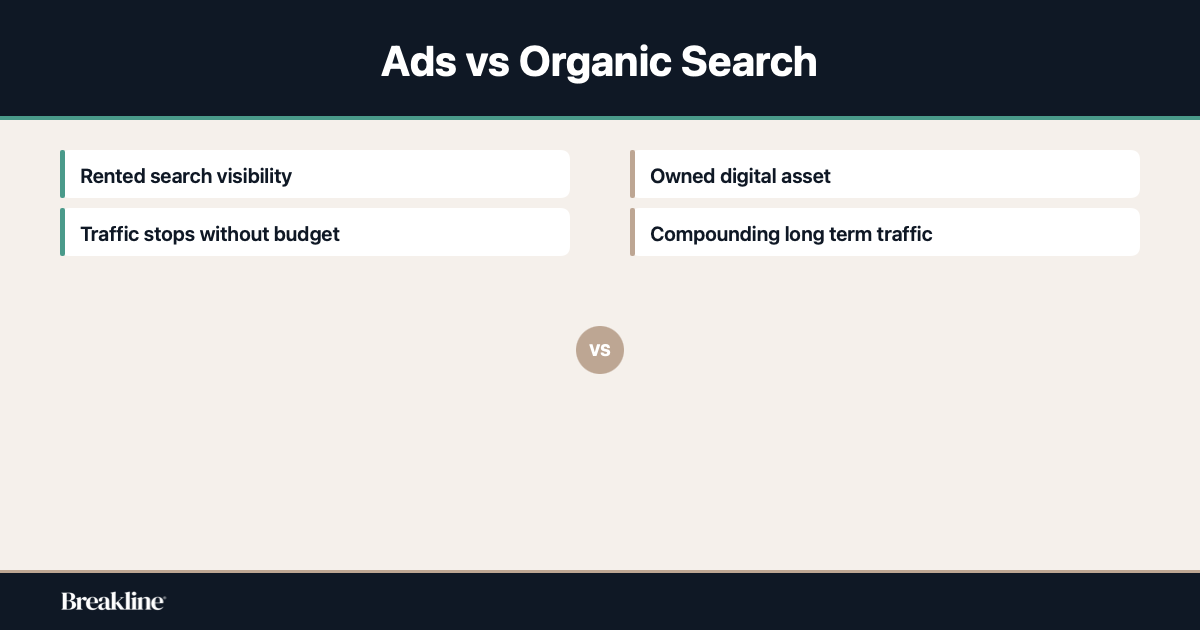
When you use Google Ads you are renting visibility. You are bidding against every other business in your sector for a tiny piece of screen real estate. The landlord raises the rent whenever they feel like it.
Cost per click is going up. In 2026 the average cost per click is expected to hit somewhere between $2 and $5.26 depending on your industry. That is just for a click. Not a lead. Not a sale. Just a visitor.
If you have a budget of $250,000 a year for marketing that money disappears into the ether with ads. You get the leads you paid for and nothing else remains. With SEO that same investment builds something that lasts. I see data all the time showing that for a quarter million spend SEO generates about 187 qualified leads compared to just 77 from Google Ads.
The math is hard to ignore.
There is also the issue of dependency. If 100% of your leads come from a source that requires a daily cash injection you are not building a brand. You are feeding a machine. I have seen businesses collapse because their cost per acquisition doubled overnight and they had no organic traffic to fall back on.
It is stressful. You check your phone every morning to see if the campaigns are running. With organic search you can actually take a holiday without worrying that your lead flow will evaporate.
People trust organic results more
We are all cynics now. When you search for something do you click the first thing you see that says “Sponsored”? Probably not. You scroll past it. I do it. Your customers do it.
We have trained ourselves to ignore the ads at the top. It is called banner blindness. We skip right down to the first organic result because we trust that Google put it there for a reason other than money.
The stats back this up. The top organic result captures about 28% of clicks. That is huge. People see organic listings as earned recommendations. They see ads as sales pitches.
If you are a solicitor or a dentist this trust factor is massive. If someone is looking for “emergency dentist near me” they might click an ad out of desperation. But if they are looking for “best cosmetic dentist for veneers” they are going to do their research. They want to see who ranks naturally. They want authority.
An ad says “I can pay to be here”.
An organic ranking says “I deserve to be here”.
There is a psychological difference there that money cannot buy. I think it is about credibility. If you are nowhere to be found in the organic results but you are plastering ads everywhere it looks suspicious. It looks like you are trying too hard to compensate for a lack of reputation.
Paying Google does not help your SEO
I hear this myth constantly. A client will tell me they expect their rankings to improve because they are spending ten grand a month on ads. It does not work that way.
Google has stated this officially and repeatedly. The two systems are separate. There is a firewall between the ads team and the search algorithm team. Spending money on ads does not buy you favor with the organic algorithm.
You could spend a million a month on PPC and still rank on page 50 for your main keyword if your website is rubbish. It is harsh but true.
However there is an indirect benefit. I am not saying they are totally unconnected in the real world. If you run ads you get data. You can see exactly which keywords convert into paying customers.
You can take that data and feed it into your SEO strategy. Instead of guessing which keywords to target you know for a fact that “commercial roofing repair” converts better than “roof fixers”. That insight is valuable. But the act of paying itself? It does nothing for your rankings.
The ROI difference is staggering
Let’s talk about money. At the end of the day you are running a business not a charity. You want the best return on your investment.
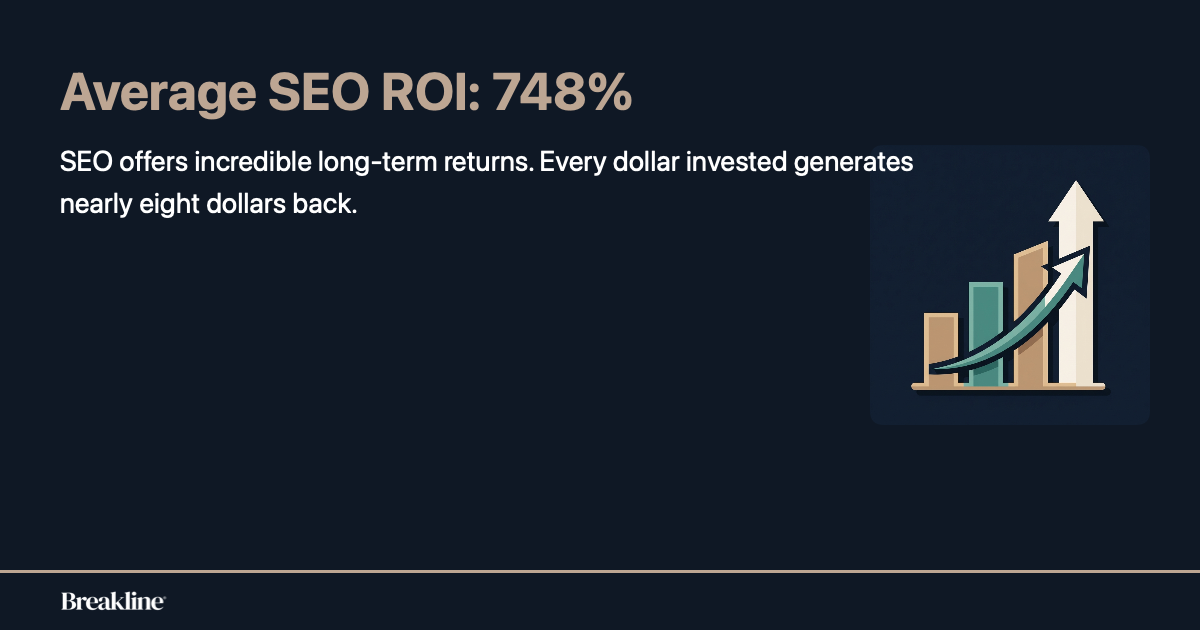
SEO has a higher ROI in the long run. The average return is something like 748%. That means for every dollar you spend you get nearly eight back. Google Ads sits around 200%. That is still good profit but it pales in comparison.
Why the big difference?
It is because of the compounding effect. When you write a great piece of content or earn a strong backlink it works for you forever. You pay for it once (time or money) and it brings in traffic for years.
With ads you pay for every single visitor. The moment you stop paying the visitor count stops increasing. Your cost per acquisition stays flat or goes up. With SEO your cost per acquisition should actually go down over time as your authority grows.
I worked with a client once who spent a fortune on ads for years. They were terrified to stop. We started a solid SEO campaign and after about 12 months they were getting more traffic from organic than paid. They managed to cut their ad spend by half and kept growing. That is the power of owning your presence.
When you should actually use Ads
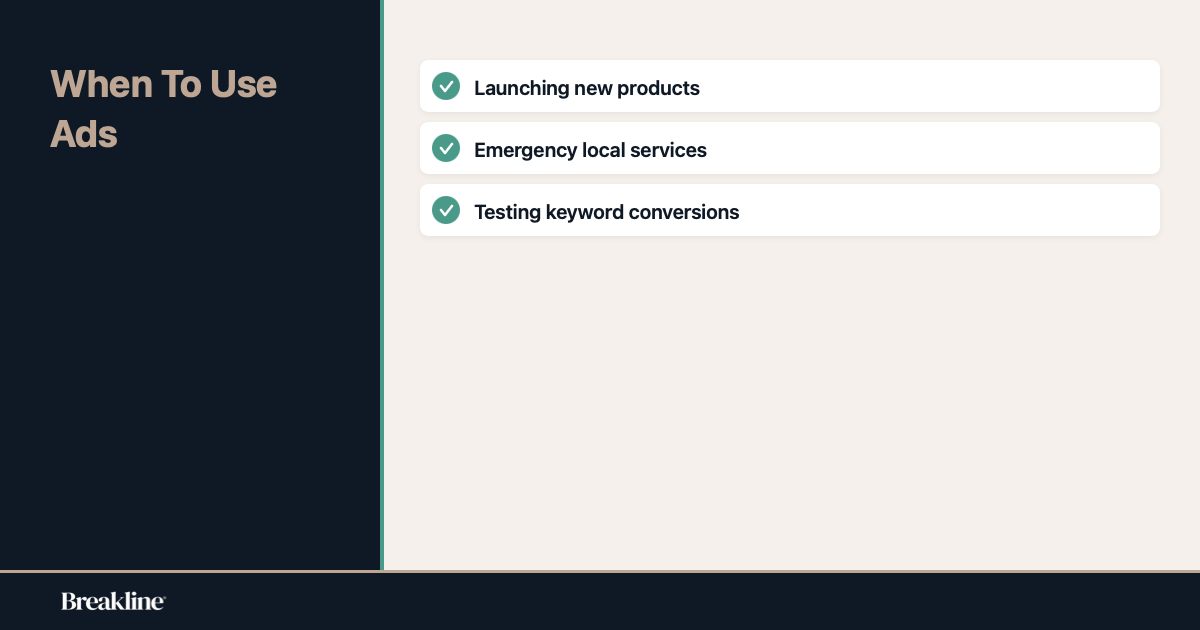
I am not bashing Google Ads. I think they are brilliant for specific things. If you are launching a new product next week SEO is too slow. You need eyeballs now.
Ads are instant. You can set up a campaign in the morning and have leads by lunch. That is incredible speed.
If you are a roofer and a massive storm just hit your town you don’t have time to write blog posts about storm damage and wait six months for them to rank. You need to be at the top of Google right now while people have leaks in their living rooms. Ads are perfect for that.
They are also great for testing. Before you commit six months of SEO resources to a specific keyword you can run an ad for a week to see if anyone actually buys anything when they search for it. It is a low risk way to validate your strategy.
But relying on them 100% is a mistake. It is like eating only sugar. You get a burst of energy but it isn’t sustainable health.
The hybrid approach works best
The smartest businesses don’t choose one or the other. They do both. It is not an either or situation.
When you appear in the ad section AND the organic results you dominate the page. You are taking up more visual space. It makes you look like the market leader. If a user sees your brand twice on the first page the likelihood of them clicking increases dramatically.
It also provides a safety net. If Google releases a core update and your rankings wobble your ads keep the leads coming. If ad prices spike due to a new competitor your organic traffic keeps your average cost down.
I like to think of it as a diversified portfolio. You wouldn’t put all your retirement savings into a single stock. Why would you put all your lead generation into a single channel?
Plus there are times when you just cannot rank organically for certain terms. Maybe the competition is Wikipedia or Amazon. You are never going to beat them with SEO. So you buy an ad for that specific term and use SEO for the long tail questions your customers are asking.
Patience is the hardest part
Here is the reality check. SEO is slow. It is frustratingly slow sometimes. It can take 3 to 12 months to really see the needle move especially in competitive industries.
If you are used to the instant gratification of PPC this can feel like torture. You are paying a monthly retainer to an agency or paying a salary to an in-house person and nothing seems to be happening in week two.
You have to hold your nerve. The results compound. It starts slow then it builds.
I have had to talk clients off the ledge during month three when they haven’t seen a massive spike in sales yet. It is normal. You are building authority. Google doesn’t trust new content instantly. It takes time to prove you are the best answer.
Ads are the bridge. They keep the lights on and the phone ringing while the SEO work builds the foundation in the background. Eventually the SEO takes over the heavy lifting but you need the patience to get there.
It is tough to accomodate that kind of delay in a quarterly business plan but it is neccessary.
The Bottom Line
You need SEO. Even if your ads are profitable right now you are leaving money on the table & taking a massive risk by ignoring organic search. You are renting your entire existence online.
I look at it this way. Someday you might want to sell your business. A buyer will look at your customer acquisition channels. If they see that 100% of your leads come from paid ads they know the business is fragile. If they see a robust organic stream that brings in customers for free that is a tangible asset they will pay a premium for.
Don’t turn off your ads if they are working. But start investing in SEO today so that in a year from now you have the luxury of choice. You want to be in a position where you can turn off the ads and still have a business.