Improving Content Quality for E-E-A-T
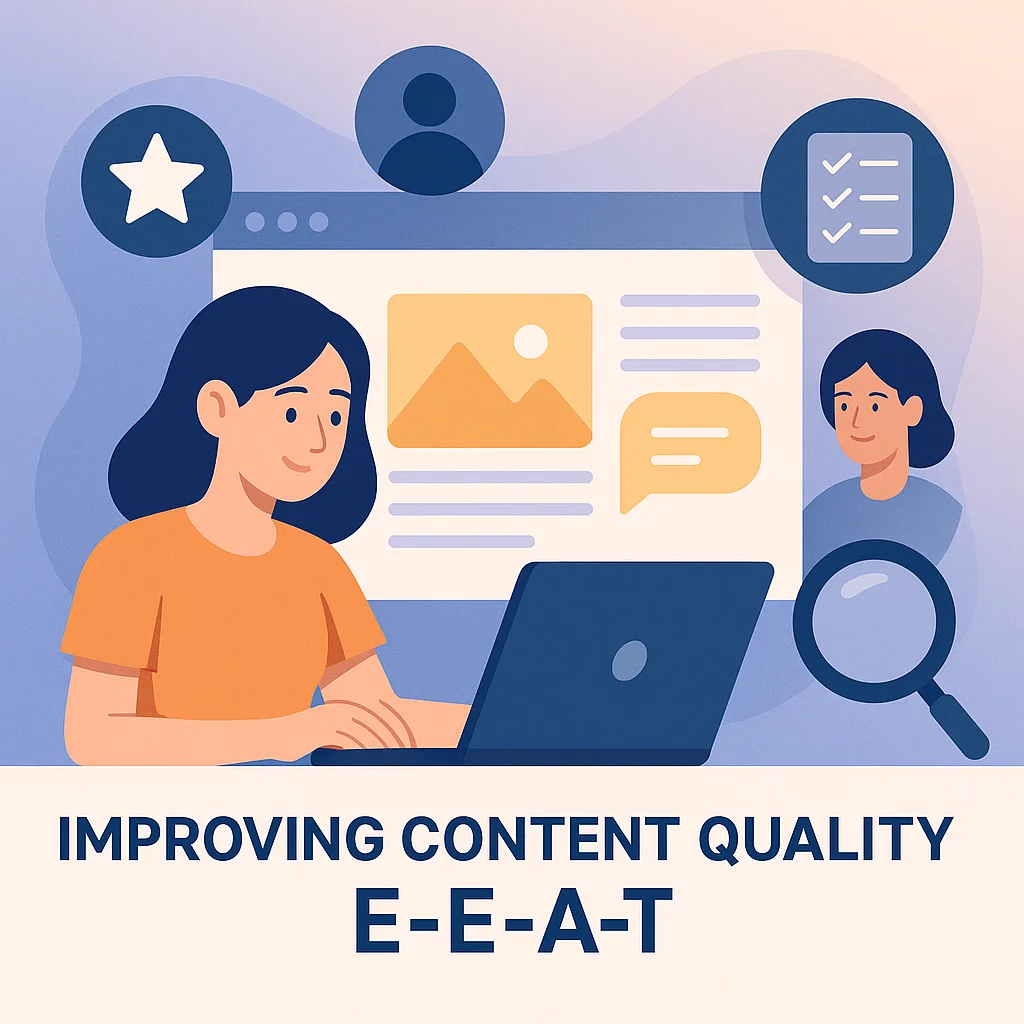
Google’s E-E-A-T framework has become the gold standard for content quality, but here’s the thing – most people are doing it completely wrong. They think slapping on an author bio & citing a few sources will magically boost their rankings. It doesn’t work that way.
After years of watching websites rise and fall based on their E-E-A-T implementation, I’ve seen what actually moves the needle. The real difference lies in the details, the authenticity, and yes, sometimes the messy imperfections that make content genuinely trustworthy.
What E-E-A-T Really Means
Experience, Expertise, Authoritativeness, and Trustworthiness aren’t just fancy acronyms to tick off a list. They’re Google’s attempt to separate genuine value from AI generated fluff. But here’s where it gets interesting.
Experience is the new kid on the block. Added in 2022, it recognises that sometimes the best advice comes from someone who’s actually DONE the thing, not just studied it. Think of it this way – would you rather read a restaurant review from a food critic or someone who actually ate there last week?
Expertise goes deeper than qualifications. Sure, credentials matter, but so does demonstrable knowledge. I’ve seen plumbers with no formal certifications write better plumbing guides than engineers with PhDs. Why? Because they know what actually breaks & how to fix it.
Authoritativeness is about recognition. Other experts cite your work. Publications quote you. People link to your content because it’s genuinely useful.
Trustworthiness ties it all together. Can people rely on what you’re saying?
Building Genuine Author Credibility
Author bios are where most people go wrong. They write these sterile, corporate blurbs that say nothing meaningful. “John has 10 years of experience in digital marketing.” So what? Half the internet claims that.
Instead, get specific. What projects have you worked on? What mistakes did you make & learn from? I once worked with a financial advisor who included in his bio that he’d lost £15,000 in a dodgy investment scheme early in his career. Guess what happened? People trusted him more, not less. He’d been there.
Your author bio should tell a story. Where did you train? What’s your biggest professional failure? What do you wish someone had told you when you started? These details create connection.
Don’t forget the practical stuff either. Professional headshots matter more than you’d think. LinkedIn profiles, company pages, speaking engagements – they all contribute to your authoritativeness. Google can see these signals.
Smart Source Selection Strategy
Citations aren’t about quantity – they’re about quality & relevance. I see content creators linking to Harvard Business Review for everything, thinking prestige equals credibility. Sometimes it does. Often it doesn’t.
For health content, government sources and peer reviewed studies are non negotiable. The NHS, Mayo Clinic, published research – these carry weight. But for business advice? Sometimes that scrappy entrepreneur’s case study is more valuable than another theoretical framework.
Mix your sources intelligently. Government data, industry reports, original research, expert interviews. But here’s the crucial bit – actually READ what you’re citing. I can’t tell you how many times I’ve seen people link to sources that don’t support their claims.
Primary sources beat secondary ones every time. If you’re discussing a study, link to the actual research, not the news article about it.
Showcasing Real User Experiences
Reviews and testimonials can make or break your E-E-A-T score, but they need to feel authentic. Those generic “This product changed my life!” testimonials? Nobody believes them anymore.
Real testimonials include specifics. Names, locations, actual problems solved. “Sarah from Manchester saved £200 per month on her energy bills using this method” beats “Amazing service!” every single time.
Video testimonials carry even more weight. People can see facial expressions, hear tone of voice. It’s harder to fake authenticity on camera. Plus, Google loves video content anyway.
Don’t hide the negative feedback either. Addressing criticisms head on actually builds trust. Show how you’ve resolved issues, what you’ve learned, how you’ve improved. That’s real business credibility.
Case studies work brilliantly here too. Detailed breakdowns of real client work, complete with challenges faced & solutions implemented.
Demonstrating First Hand Knowledge
This is where the experience factor really shines. Anyone can regurgitate information they found online. Not everyone can share what actually happened when they tried something.
Include photos of your work. Screenshots of your results. Before and after comparisons. I remember reading a gardening article where the author included pictures of their own failed attempts at growing tomatoes. Brilliant. It showed they’d actually tried what they were teaching.
Share your process, not just your conclusions. What tools did you use? What didn’t work? What would you do differently next time? These insights are pure gold for readers – and for search engines trying to evaluate authenticity.
Personal anecdotes work wonders, but keep them relevant. That story about your disastrous first website launch is perfect for an article about web design mistakes. Your holiday to Spain? Probably not so much.
Document Your Journey
Keep records of your work. Screenshots, photos, data. Future content opportunities often come from past experiences. Plus, having concrete evidence of your claims makes your content infinitely more credible.
Technical Trust Signals
The backend stuff matters too, though it’s less glamorous than writing compelling content. SSL certificates are table stakes now – if your site isn’t secure, you’re dead in the water.
Contact information needs to be real & accessible. Not just an email address buried on a contact page. Phone numbers, physical addresses for businesses, social media profiles. Make it easy for people (and search engines) to verify you exist.
About pages often get neglected, but they’re crucial for trustworthiness. Tell your story. Why did you start? What’s your mission? Who’s on your team? Real photos, real names, real stories.
Privacy policies and terms of service might seem like legal fluff, but they signal professionalism. Especially for sites handling personal data or selling products.
Building External Authority Markers
External validation carries enormous weight. Guest posting on respected sites in your field. Podcast appearances. Speaking at conferences. These activities don’t just build your profile – they create linkable mentions that Google can evaluate.
Media mentions are goldmines for authority building. Whenever you’re quoted in an article or featured in a publication, make sure there’s a clear connection back to your main site. Press pages work well for this.
Professional associations and certifications matter, but they need to be relevant. Being a member of the Chartered Institute of Marketing is great for marketing content. For cooking advice? Not so much.
Don’t forget about local authority signals if you’re a local business. Chamber of Commerce membership, local business awards, community involvement – these all contribute to your overall trustworthiness profile.
The key is consistency across platforms. Your story should align whether someone finds you on LinkedIn, reads your website, or hears you on a podcast.
Maintaining Content Standards
Quality control is where many sites fall down. You can’t publish amazing E-E-A-T content one day, then put out rubbish the next. Consistency matters.
Fact checking should be rigorous. I use multiple sources for any factual claims, especially for statistics or current events. Information changes rapidly – what was accurate last year might be completely wrong now.
Regular content audits help maintain standards. Which articles are getting the most traffic? Which ones have outdated information? What feedback are you getting from readers? This data should inform your content strategy.
Update older content when necessary. Adding recent examples, refreshing statistics, incorporating new insights – these updates signal that you’re actively maintaining your content quality.
Monitor your comments and social media mentions. Reader questions often reveal gaps in your content or areas where you could provide more clarity. Sometimes the best content improvements come from user feedback.
The Bottom Line
Improving E-E-A-T isn’t about gaming the system – it’s about genuinely becoming more trustworthy, more expert, more authoritative. The tactics I’ve outlined here work because they reflect real quality improvements.
The businesses I’ve seen succeed with E-E-A-T are those that embrace transparency. They share their failures alongside their successes. They cite sources properly. They respond to criticism constructively. They invest in building genuine expertise rather than just appearing expert.
It takes time. Building real authority doesn’t happen overnight, and anyone promising quick E-E-A-T fixes is probably selling snake oil. But the payoff is worth it – better rankings, more trust, and ultimately, more business.
Start with the basics: improve your author bios, cite quality sources, gather authentic testimonials. Then work on the deeper elements like demonstrating real experience and building external authority. Your content – and your search rankings – will thank you for it.