
AI search
SEO Tactics That Didn’t Exist 3 Years Ago But Are Crucial In 2026
The SEO tactics that matter for AI search: GEO, entity trust signals, content chunking, Answer Engine Optimization and stricter technical basics.
 By Alexander Thomas, Founder Updated 9 min read
Key takeaways
- SEO has shifted from ranking pages to feeding answers to machines, so the aim is to be the citation an AI model uses, not just the click.
- Entity trust signals, such as Wikipedia mentions, a Crunchbase profile, podcast interviews and press coverage, show you are real and have expertise.
- For Gemini and AI mode, give images context, add video transcripts and use real photos instead of generic stock images.
- Content chunking breaks a page into modular blocks of 100 to 200 words, each covering one sub-topic, so AI can pull out the part it needs.
- Give concise, direct answers for zero-click searches, write from lived experience, and keep Core Web Vitals and schema markup in good order.

On this page9 sections
If you are looking for the short answer here it is. The game has shifted from ranking pages to feeding answers directly to machines. SEO in 2026 is less about keywords on a page and more about Generative Engine Optimization where you convince an AI model that your brand is the definitive source of truth.
You need to structure data so machines can read it, build “entity trust signals” so they believe it, and chunk your content so they can parse it.
We aren’t just fighting for a click anymore. We are fighting to be the citation.
It feels weird to say that out loud.
I remember sitting at my desk a few years back thinking that AI was just going to be a tool for writing cheap blog posts. I was wrong. We were all wrong.
It didn’t just change how we write. It changed where the traffic goes.
Now we have to deal with the reality that a huge chunk of users never even visit a website. They get the answer and leave.
The shift to Generative Engine Optimization
Generative Engine Optimization
We used to call it SEO. Now half the time I’m talking about Generative Engine Optimization or GEO. It sounds like another buzzword but it is actually the biggest shift I have seen in fifteen years of doing this work.
It’s the practice of optimizing content specifically for generative AI models rather than traditional search algorithms.
Think about it.
When Google rolled out AI Overviews broadly back in 2024 it panicked a lot of people. Suddenly the ten blue links were pushed down. If you weren’t in that generated snapshot you were invisible.
The goal now is to be one of the sources the AI pulls from. This means your content needs to be fact-heavy and authoritative. Fluff gets ignored.
I read a report from Svitla Systems recently that nailed it. They said SEO is now a foundational element of brand strategy. You can’t just hack your way to the top with backlinks anymore.
The AI models are looking for consensus. If your site says one thing & every other site says something else the AI will ignore you. You have to align with the consensus or have such overwhelming authority that you create the consensus.
It is tricky though.
You have to balance writing for a human with formatting for a machine. I find myself stripping away adjectives and focusing on nouns and verbs.
Direct sentences work best. If you confuse the bot you lose the ranking. That is the new reality.
Why entity trust signals matter now
Modern Entity Signals
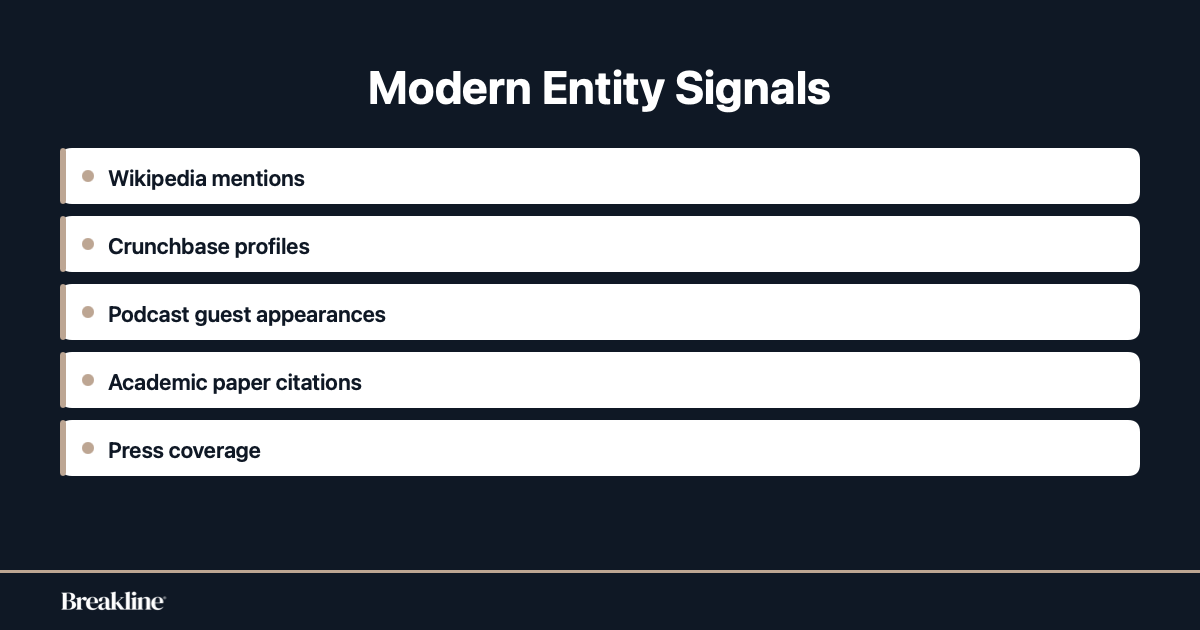
This is where things get interesting. We used to talk about E-E-A-T like it was a checklist. Now we talk about Entity trust signals. These are measurable data points that tell a search engine that you are a real person or a real business with actual expertise.
It is not enough to say you are an expert.
The algorithms looking at Entity optimization are checking for your footprint across the web. Are you mentioned in Wikipedia? do you have a Crunchbase profile? have you been interviewed on podcasts?
These mentions are the new backlinks. I have seen clients with terrible link profiles rank highly simply because their brand entity was solid. Google knows who they are.
Entity trust signals are the currency of 2026.
I had a client last year. A small manufacturer. They had almost no blog content. But the founder had been on fifty industry podcasts and was cited in three academic papers.
When Gemini started taking over more search share their traffic spiked. Why? Because the model recognized the entity as an authority. It didn’t care about keyword density. It cared about trust.
You need to build your brand’s social proof. Go on podcasts. Do interviews. Get cited in the press.
Marketer Milk points out that these signals are what separate the humans from the AI slop. If you are a ghost you won’t rank.
Optimizing for Gemini and AI mode
Google isn’t just a text engine anymore. With the rise of Gemini and the default AI mode in search we are dealing with a multimodal beast. It looks at images and video and text all at once. This changed how I audit websites.
I used to just look at headers and meta tags.
Now I am looking at whether the images have context. Does the video have a transcript? Is the visual content original or stock? Stock photos are death in 2026.
The AI knows they are generic. It wants to see real photos of real products in real hands. That is a signal of legitimacy.
AI mode prioritizes answers that feel “lived in”. If you are reviewing a coffee maker show me the coffee stains on the counter. Show me the steam. The AI can “see” these details now. It uses them to verify that you actually possess the item you are writing about.
It seems crazy that we have to prove we exist to a computer.
But that is where we are. Investment in tools targeting Gemini has gone up 25% this year according to Leadfeeder. Everyone is scrambling to figure out how to feed the multimodal beast.
My advice is to be authentic. Use your phone camera. Don’t polish everything too much. Imperfection is a trust signal now.
Content chunking is non negotiable
Here is a technical tactic that works. Content chunking. It sounds gross but it is effective. This involves breaking your content into modular blocks of maybe 100 to 200 words. Each block should cover a specific sub-topic completely.
The Chunking Impact
Why do we do this?
Because of natural language processing. NLP models like the ones powering ChatGPT and Google’s summary tools digest information better when it is structured this way. They don’t want to read a wall of text any more than you do. They want discrete units of information they can pull out and serve to a user.
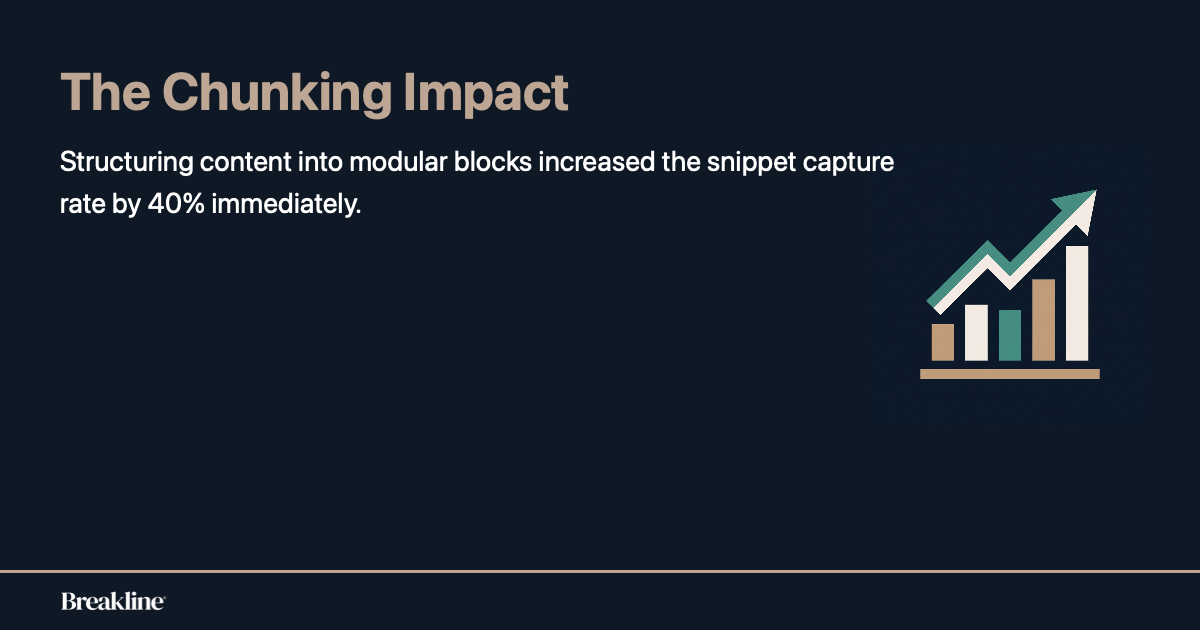
I started doing this in 2024. The results were immediate. We saw our snippet rate go up by 40%.
It makes sense. If you write a 3000 word essay with no breaks the AI has to work hard to extract the answer. If you break it into chunks with clear headings the AI can just grab the relevant chunk and serve it.
It creates a better user experience too.
People skim. We know this. But now machines skim too. Content chunking serves both masters.
You use clear headings. You use bullet points. You keep paragraphs short. It is not dumbing it down. It is clarifying it.
Sometimes I worry we are changing how we write just to please the bots. Maybe we are. But if it makes the content easier to read for humans too then I guess it is a win win. It’s hard to accomodate all these changes without losing your voice though.
Answer Engine Optimization strategies
Answer Engine Optimization or AEO is the cousin of GEO. This is specifically about targeting those zero-click searches. You know the ones. You ask “how long to boil an egg” and the answer pops up right there. You never click the website.
In 2026 over 60% of queries end without a click.
That stat is terrifying if you rely on ad revenue. But for brand awareness it is an opportunity. If you are the source of that answer your brand name gets cited. “According to Breakline…” appears on the screen.
That is valuable. It builds that entity authority we talked about earlier.
To win at Answer Engine Optimization you have to be concise. The AI wants a direct answer. It doesn’t want your life story. It doesn’t want a preamble about how much you love eggs. It wants “Boil for 6 minutes for a runny yolk.”
Search Engine Land calls this the “citation economy”. Your wins depend on the signals models see not the pages users visit. You have to adapt your content before the agents take over the whole journey. It is a mindset shift.
I try to include a “key takeaways” section at the top of every article now. It feeds the AEO engine perfectly. It gives the bot exactly what it wants right upfront.
The human element and lived experience
With all this talk of machines and natural language processing you might think humans are obsolete. It is actually the opposite. Human-written content is outranking AI-generated content significantly this year.
AI Slop vs. Human
People are sick of the robot voice.
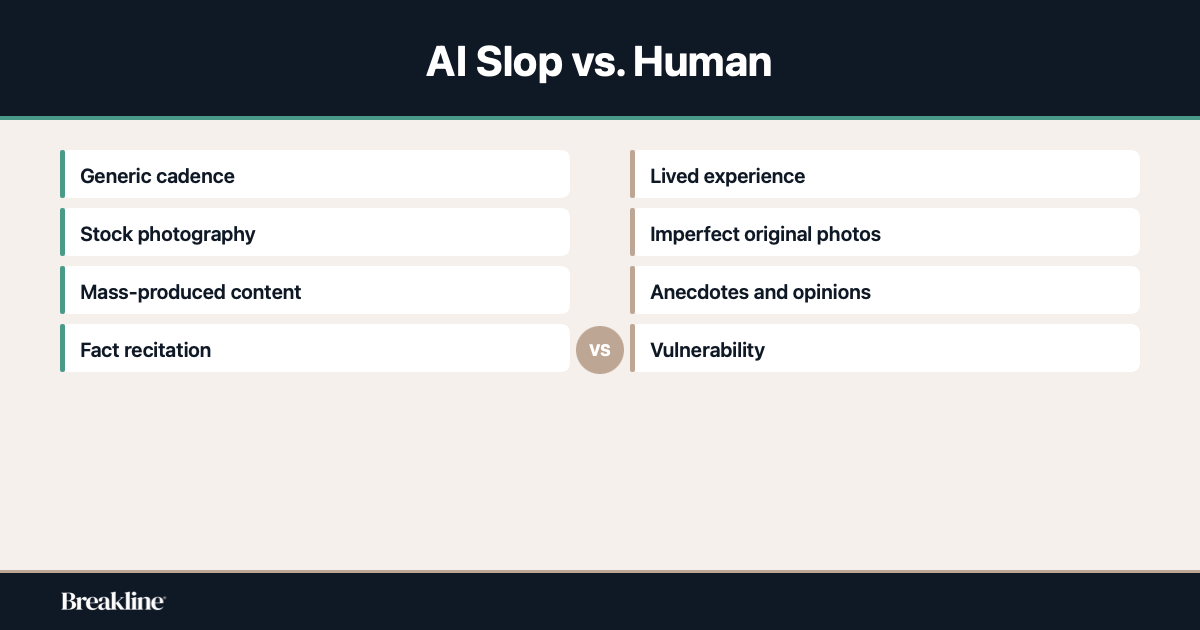
You know the one. “In the ever-evolving landscape of…” It drives me nuts. Google hates it too. They have tuned their algorithms to detect that generic AI cadence.
They want “lived experience“. They want to know that a human actually felt the pain or solved the problem.
I have a rule for my team. If you haven’t done it don’t write about it. Or interview someone who has. We need anecdotes. We need specific details that an LLM wouldn’t know.
A robot can tell you how to change a tire. A human can tell you that the lug nuts are always tighter than you think and you might need to jump on the wrench.
That detail matters.
ChatGPT can’t jump on a wrench. That is your competitive advantage. IOVISTA warns that if you rely on traditional tactics like keyword stuffing or mass-produced content your traffic is in trouble. You have to be real. You have to be messy. You have to have an opinion.
I think that is why personal blogs are making a comeback. People want connection. They want to trust the person behind the words. So don’t be afraid to use “I”.
Don’t be afraid to admit you failed at something. That vulnerability is a trust signal that AI cannot fake.
Technical foundations are stricter
We can’t ignore the tech stuff. While we are busy with Entity optimization the technical requirements have gotten tighter. Core Web Vitals are brutal now. If your mobile site takes more than 2.5 seconds to load you are dead in the water.
Lazy loading is essential.
But not just for images. We are lazy loading comments and third-party scripts. We need the main content to hit the browser instantly so the NLP models can parse it without waiting. Speed is part of the language the bots speak.
Schema markup is the other piece. It used to be a “nice to have”. Now it is mandatory. You need to wrap your entities in schema so the search engine knows exactly what they are.
Is this a review? Is it a person? Is it a corporation? Don’t make the bot guess.
I spend half my week just fixing schema errors. It is not glamorous work. But it is the plumbing that makes Generative Engine Optimization possible. If the pipes are broken the water doesn’t flow. Or in this case the traffic doesn’t flow.
It’s tedious but necessary.
We are also seeing a rise in “agentic search” where AI agents perform tasks for users. Optimizing for this means your technical SEO needs to be flawless so an API can interact with your site. If your booking form is broken the agent can’t book the appointment. You lose the sale.
The Bottom Line
It is easy to get overwhelmed by all this. Generative Engine Optimization & AI Overviews & Entity trust signals. It is a lot of new vocabulary for a job that used to be about keywords and links. But if you strip it all back the core principle hasn’t changed that much.
You need to provide value.
The difference is who determines that value. It used to be a simple algorithm counting links. Now it is a complex neural network trying to understand the nature of truth. That sounds dramatic I know. But it is true.
My advice? Focus on being the entity that deserves to rank. Build your reputation in the real world and let the digital signals follow. Write for humans but structure it for machines.
Be concise. Be honest. And for the love of god don’t use stock photos.
We are in a transition period. The dust hasn’t settled yet. But the people who are leaning into entity optimization and content chunking are the ones winning right now. The rest are just waiting to be replaced by a chatbot.
Get to work.
Frequently asked questions
What is Generative Engine Optimization?
Generative Engine Optimization, or GEO, is the practice of optimizing content specifically for generative AI models rather than traditional search algorithms. The goal is to be one of the sources the AI pulls from, so your content needs to be fact-heavy and authoritative. Fluff gets ignored.
What are entity trust signals?
Entity trust signals are measurable data points that tell a search engine you are a real person or a real business with actual expertise. Algorithms check your footprint across the web, such as mentions in Wikipedia, a Crunchbase profile and interviews on podcasts. These mentions are the new backlinks.
What is content chunking?
Content chunking means breaking your content into modular blocks of maybe 100 to 200 words, each covering a specific sub-topic completely. NLP models digest information better when it is structured this way. They want discrete units of information they can pull out and serve to a user.
What is Answer Engine Optimization?
Answer Engine Optimization, or AEO, is the cousin of GEO and is specifically about targeting zero-click searches, where the answer appears without a visit to the website. To win, be concise and give the AI a direct answer with no preamble. A key takeaways section at the top of an article gives the bot what it wants upfront.
How should images and video be handled for Gemini and AI mode?
Google looks at images, video and text all at once, so check that your images have context and your videos have a transcript. Use real photos of real products in real hands rather than stock photos, which the AI knows are generic. Imperfection can act as a trust signal.
Why does human-written content still matter for SEO?
Google wants lived experience: proof that a human actually felt the pain or solved the problem. Specific details and anecdotes that an LLM wouldn't know are your competitive advantage. If you haven't done something, don't write about it, or interview someone who has.
Which technical foundations matter most for AI-driven search?
Core Web Vitals are brutal, so a slow mobile site is dead in the water. Lazy load comments and third-party scripts as well as images, so the main content reaches the browser without waiting. Wrap your entities in schema markup so the search engine knows exactly what they are.
Further reading
- Generative engine optimization, Wikipedia
- AI Overviews ranking factors, SEOmonitor
- Mentions, citations and clicks in content strategy, Search Engine Land
- Natural language processing tutorial, GeeksforGeeks
- Google users are less likely to click on links when an AI summary appears in the results, Pew Research Center