
Keyword research
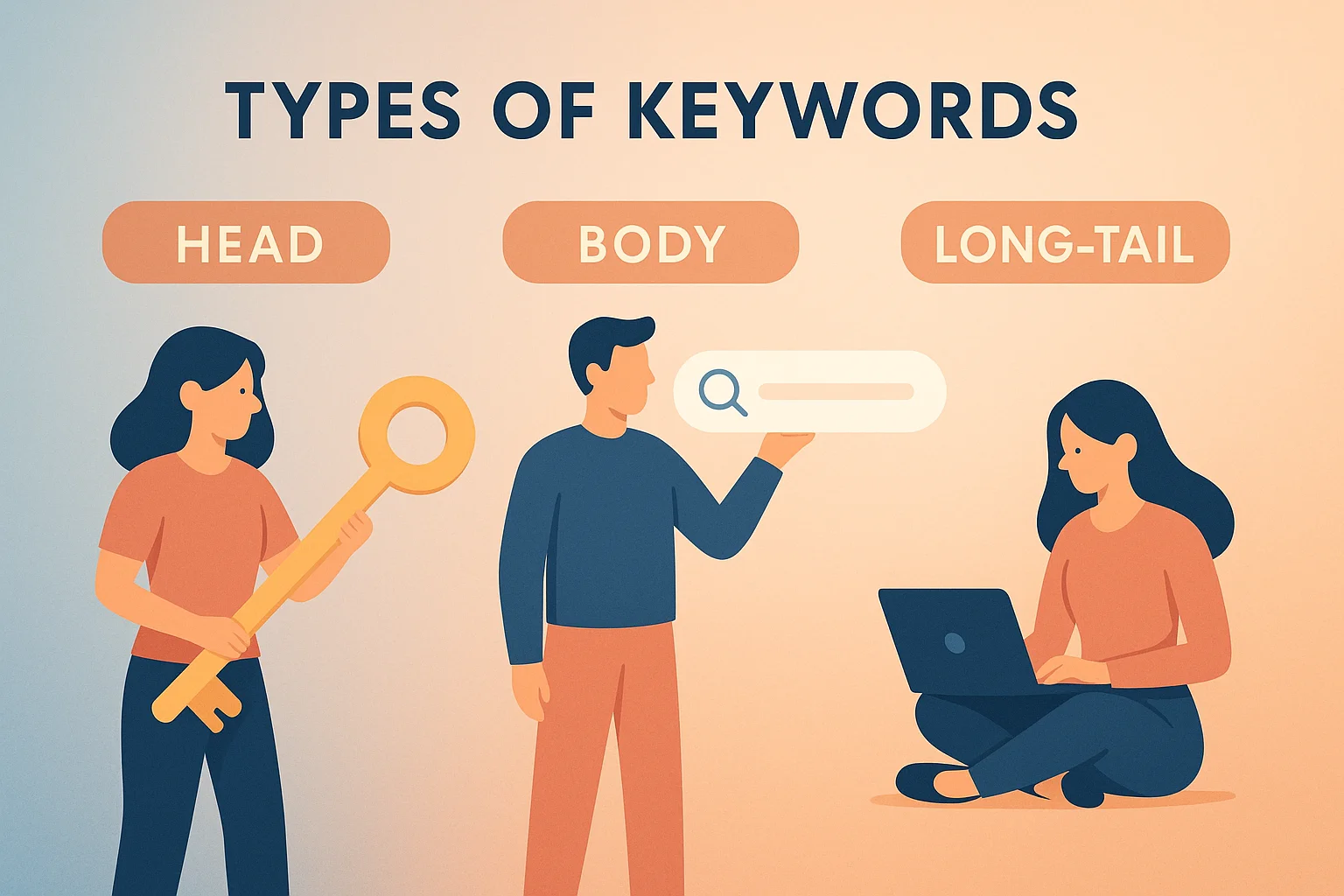
Types of Keywords: Head, Body & Long-Tail
How head, body and long-tail keywords differ in search volume, intent and competition, and how to combine all three in one SEO strategy.
 By Alexander Thomas, Founder Updated 7 min read
Key takeaways
- Head keywords are single words or very short phrases with massive search volumes, massive competition and unclear intent.
- Body keywords are typically two to three word phrases that balance clearer intent with decent search volumes.
- Long-tail keywords are detailed, specific phrases with lower volumes and less competition, and they are pure gold for conversions.
- High search volume does not automatically mean high-quality traffic, and each extra word in a search reveals more about intent.
- Build a balanced strategy like a pyramid, with long-tail keywords at the base, body keywords in the middle and head keywords at the peak.
On this page9 sections
Keywords form the backbone of every successful SEO strategy, but not all keywords are created equal. You’ve got three distinct types that serve different purposes, attract different audiences & deliver varying results. Head keywords, body keywords, and long-tail keywords each play unique roles in how people find your content online.
Think of it like fishing. Sometimes you cast a wide net hoping to catch anything swimming nearby. Other times you use specific bait targeting exactly the fish you want.
The relationship between these keyword types isn’t straightforward either. It’s messy, unpredictable, and frankly more interesting than most SEO guides make it sound.
Head Keywords Explained
Head keywords are the big players. Single words or very short phrases that millions of people search for every month. We’re talking about terms like “shoes,” “insurance,” or “recipes.” These keywords generate massive search volumes but come with equally massive competition.
Here’s where it gets tricky though. Head keywords are notoriously difficult to rank for, especially if you’re not already an established brand. Google’s first page for “shoes” isn’t going to feature your new boutique store anytime soon. Nike, Adidas & Amazon have that territory locked down tight.
The conversion intent for head keywords varies wildly. Someone searching “shoes” might be browsing casually, researching different types, or ready to buy immediately. You simply can’t tell from such a broad search term.
I’ve seen businesses pour thousands of pounds into targeting head keywords without considering the bigger picture. Sure, the search volumes look tempting when you see 500,000 monthly searches, but ranking on page one requires serious authority and resources.
Body Keywords Strike The Balance
Body keywords sit comfortably in the middle ground. These are typically two to three word phrases that offer more specificity than head keywords whilst maintaining decent search volumes. Examples include “running shoes,” “car insurance quotes,” or “healthy breakfast recipes.”
The beauty of body keywords lies in their balance. They’re specific enough to indicate clearer user intent but broad enough to attract meaningful traffic volumes. When someone searches “running shoes,” you know they’re interested in athletic footwear, not dress shoes or boots.
Competition for body keywords remains fierce, but it’s more manageable than head keywords. You’re competing with fewer websites, and the intent becomes clearer. This makes your content more relevant to what users actually want.
Search volumes for body keywords typically range from thousands to tens of thousands of monthly searches. Not quite the massive numbers of head keywords, but substantial enough to drive real traffic to your site. The conversion rates often improve too because the intent is clearer.
Long-Tail Keywords Get Specific
Long-tail keywords are the detailed, specific phrases that reveal exactly what someone wants. We’re talking about searches like “best waterproof running shoes for flat feet” or “cheap car insurance for new drivers under 25.” These phrases might only get searched a few hundred times monthly, but they’re pure gold for conversions.
The specificity of long-tail keywords makes them incredibly valuable. When someone types a seven-word search query, they’re not just browsing. They know what they want & they’re probably ready to take action.
Competition drops significantly for long-tail keywords. Fewer websites bother targeting these specific phrases, which creates opportunities for smaller businesses to compete effectively.
I remember working with a client who sold specialised camera equipment. Instead of trying to rank for “cameras” (impossible), we focused on terms like “mirrorless cameras for wildlife photography under £1000.” The traffic was lower, but nearly every visitor became a customer.
The compound effect of long-tail keywords is remarkable too. Target enough specific phrases & the combined traffic can rival more competitive terms.
Search Volume Patterns
Search volume follows a predictable pattern across keyword types, but the numbers can be misleading. Head keywords dominate raw volume statistics, often generating hundreds of thousands of searches monthly. Body keywords typically see thousands to tens of thousands. Long-tail keywords might only attract hundreds of searches.
But here’s what the numbers don’t tell you. High search volume doesn’t automatically mean high-quality traffic. Those massive head keyword searches include people at every stage of the buying journey, from casual browsers to serious buyers.
The long tail effect suggests that collectively, all those specific long-tail searches actually represent the majority of total search volume. People search for incredibly specific things more often than we realise.
Think about your own searching behaviour. How often do you search for single words versus detailed phrases? Most of us type fairly specific queries because we want precise answers.
Understanding Conversion Intent
Conversion intent varies dramatically across keyword types, and this is where things get really interesting. Head keywords represent the broadest possible intent. Someone searching “laptops” could be researching, comparing, window shopping, or ready to purchase immediately.
Body keywords narrow the intent considerably. “Gaming laptops” tells you the person wants something specific for gaming. “Cheap gaming laptops” adds price sensitivity to the mix. Each additional word reveals more about what they actually want.
Long-tail keywords practically scream their intent. “Best gaming laptop under £800 for Fortnite” leaves very little room for interpretation. This person knows their budget, their intended use & they’re probably ready to buy soon.
The conversion funnel becomes clearer when you map keywords to user intent. Head keywords capture people early in their research phase. Body keywords catch them as they narrow down options. Long-tail keywords grab them just before making decisions.
Commercial intent varies too. Some keywords clearly indicate buying intent whilst others suggest research or information gathering. “Buy running shoes online” versus “how running shoes should fit” represent completely different stages of the customer journey.
Competitive Landscape Reality
Competition intensity follows an inverse relationship with keyword length. Head keywords face the most brutal competition imaginable. Every major brand, established website & SEO-savvy business targets these terms. Breaking through requires significant authority, substantial budgets & often years of consistent effort.
Body keywords remain competitive but offer more realistic opportunities. You’re still fighting established players, but the field is narrower. Local businesses can compete effectively for body keywords within their geographic area or niche.
Long-tail keywords present the most achievable opportunities. The specificity that makes them less attractive to big players makes them perfect for focused businesses. A local bakery can’t compete for “cakes” but might dominate “custom birthday cakes Manchester city centre.”
The cost implications are significant too. Pay-per-click advertising for head keywords can cost £10, £20, or even £50 per click. Long-tail keywords might cost 50p or £2 per click whilst delivering better conversion rates.
Building Your Balanced Strategy
A smart SEO strategy combines all three keyword types strategically rather than focusing exclusively on one type. Think of it as building a pyramid. Long-tail keywords form the foundation, body keywords create the middle section & head keywords represent the aspirational peak.
Start with long-tail keywords to build initial traction. These easier targets help establish your website’s authority whilst generating qualified traffic. As your domain authority grows, gradually target more competitive body keywords.
Head keywords should be long-term goals rather than immediate targets. Include them in your content naturally, but don’t expect quick results unless you’ve already built significant authority.
Content creation becomes more strategic when you understand keyword types. A single piece of content can target multiple keyword variations. Your article about “best running shoes for beginners” might naturally include related long-tail phrases throughout.
Keyword clustering works particularly well here. Group related terms together & create comprehensive content that satisfies multiple search intents simultaneously. This approach has become increasingly important as Google gets better at understanding context and user intent.
The tracking and measurement approach should differ too. Don’t expect head keywords to drive immediate results. Monitor long-tail performance weekly, body keywords monthly & head keywords quarterly. The timeframes for seeing results vary dramatically between keyword types.
Final Thoughts
Mastering keyword types isn’t about choosing one over the others. It’s about recognising that each serves a distinct purpose in your broader SEO strategy. The websites that succeed long-term understand this balance & plan accordingly.
I’ve watched too many businesses chase head keywords exclusively, burning through budgets without results. I’ve also seen others focus solely on long-tail terms & struggle to scale their traffic meaningfully.
The sweet spot lies in building from the bottom up. Establish your authority with long-tail keywords, expand into body keywords as you grow & gradually compete for head terms when you’ve built the necessary foundation.
Your keyword strategy should evolve with your business. What works for a startup differs from what works for an established company. Stay flexible, monitor performance & adjust your focus as opportunities change.
Frequently asked questions
What is the difference between head, body and long-tail keywords?
Head keywords are single words or very short phrases, such as "shoes", with massive search volumes and competition. Body keywords are typically two to three word phrases, such as "running shoes", that balance specificity with volume. Long-tail keywords are detailed phrases, such as "best waterproof running shoes for flat feet", that reveal exactly what someone wants.
Why are head keywords so hard to rank for?
Every major brand, established website and SEO-savvy business targets head keywords. Breaking through requires significant authority, substantial budgets and often years of consistent effort. Their intent is also unclear, because someone searching a broad term might be browsing casually, researching or ready to buy.
Why do long-tail keywords often convert better?
Long-tail keywords reveal exactly what someone wants, so a person typing a detailed query is usually not just browsing. They often know their budget and intended use and are probably ready to take action. Fewer websites target these phrases, which gives smaller businesses a chance to compete effectively.
Does a high search volume mean better traffic?
No, high search volume does not automatically mean high-quality traffic. Head keyword searches include people at every stage of the buying journey, from casual browsers to serious buyers. The long tail effect suggests that, collectively, specific long-tail searches make up the majority of total search volume.
How do click costs differ between head and long-tail keywords?
Pay-per-click advertising for head keywords can cost £10, £20 or even £50 per click. Long-tail keywords might cost 50p or £2 per click while delivering better conversion rates. Competition intensity follows an inverse relationship with keyword length, and the cost implications are significant too.
How often should you check results for each keyword type?
Monitor long-tail performance weekly, body keywords monthly and head keywords quarterly. Do not expect head keywords to drive immediate results, because the timeframes for seeing results vary dramatically between keyword types.
What is keyword clustering and why does it help?
Keyword clustering means grouping related terms together and creating comprehensive content that satisfies multiple search intents at once. A single article, such as one about the best running shoes for beginners, can naturally include related long-tail phrases. The approach has become increasingly important as Google gets better at understanding context and user intent.
Further reading
- CMA takes first steps to improve competition in search services in the UK (press release), Competition and Markets Authority (CMA)