
Content
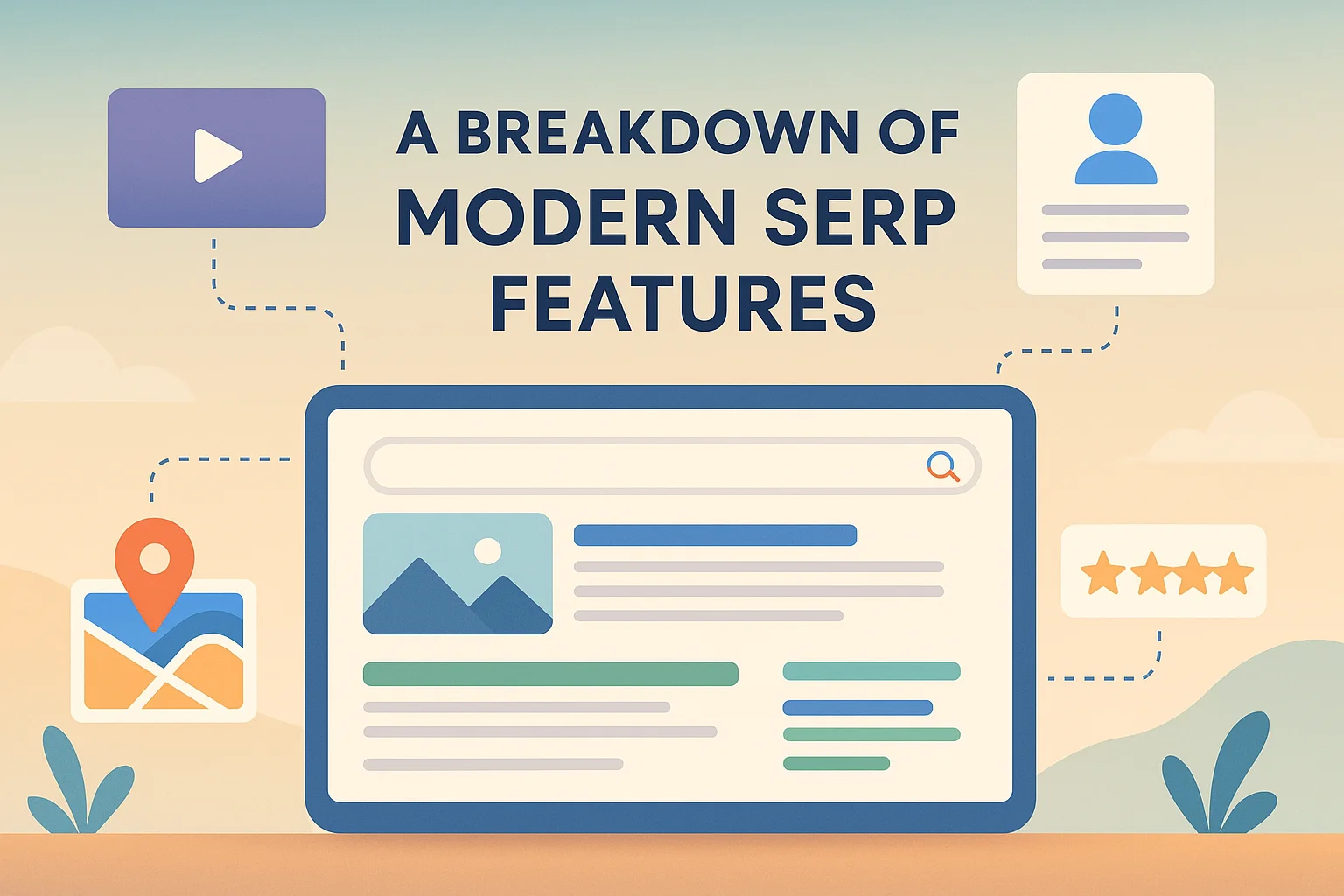
A Breakdown of Modern SERP Features: Featured Snippets, People Also Ask & More
How to optimise for featured snippets, People Also Ask, video carousels, rich snippets, the local pack, image packs and Shopping results.
 By Alexander Thomas, Founder Updated 6 min read
Key takeaways
- Featured snippets show paragraphs, lists or tables at the top of results, and pages lower down the first page can still win them.
- To win snippets and People Also Ask boxes, start with the exact question and a clear answer, then cover related questions in their own sections.
- Use target keywords in YouTube titles and descriptions, and add timestamps, transcriptions and compelling thumbnails to compete in video carousels.
- Rich snippets use schema markup to add details such as star ratings and prices; they may not lift rankings, but they improve click-through rates.
- The local pack depends on a complete Google Business Profile, reviews and consistent citations, while image packs reward image SEO fundamentals.
On this page9 sections
Search results pages have become proper battlegrounds. No longer can you just rank #1 & call it a day – Google’s serving up featured snippets, video carousels, and those endlessly expanding “People Also Ask” boxes that seem to answer everything except what you actually searched for.
I’ve spent years watching these SERP features evolve, and honestly? They’re both brilliant & frustrating in equal measure. But here’s the thing – if you’re not optimising for them, you’re missing out on prime real estate that sits above traditional organic results.
Featured Snippets: The Crown Jewel
Featured snippets are those answer boxes that appear at the top of search results, often called “position zero.” They pull content directly from web pages & display it prominently with a link to the source.
There are three main types you’ll encounter. Paragraph snippets answer direct questions with 40-60 words of text. List snippets show steps, rankings, or bullet points. Table snippets display data in rows & columns, perfect for comparisons or specifications.
The beauty of featured snippets? They can catapult you above higher-ranking competitors.
I’ve seen pages ranking #5 or #6 snag the featured snippet position, suddenly capturing massive visibility. Google typically pulls these from pages already ranking on the first page, but it’s not always the #1 result that wins.
To optimise for featured snippets, structure your content like you’re answering specific questions. Use clear headers followed by concise, definitive answers. For list snippets, format content with proper HTML lists or numbered steps. Table data should be marked up correctly – Google loves clean, semantic HTML.
The Question-Answer Format
Start paragraphs with the exact question people are asking, then immediately provide a clear answer. Don’t bury the lead with unnecessary context – get straight to the point in 40-50 words, then elaborate below.
Target long-tail keywords phrased as questions. “How to”, “what is”, “why does” – these trigger featured snippets more often than single-word searches.
People Also Ask: The Endless Rabbit Hole
PAA boxes are those expandable question sections that multiply like gremlins every time you click one. They’re simultaneously helpful & completely distracting, but they represent huge opportunities for content creators.
Google generates these questions based on related searches & user behaviour. Click on one question, & more appear. It’s an infinite scroll of curiosity that can keep users on the SERP for ages rather than clicking through to actual websites.
But here’s where it gets interesting – you can optimise for PAA boxes by creating comprehensive FAQ sections that address related questions around your main topic. I think the key is anticipating the natural progression of questions users might have.
Research PAA boxes for your target keywords manually, or use tools to extract common questions. Then create detailed answers that could realistically appear in these boxes. Format them with H3 tags followed by clear, informative paragraphs that accomodate different levels of user knowledge.
Capturing Multiple PAA Positions
Single pages can appear in multiple PAA boxes if they comprehensively cover a topic. Create pillar content that addresses 8-10 related questions within one article, each with its own section & detailed answer.
The trick is maintaining topical relevance while providing distinct value for each question.
Video Carousels: YouTube’s SERP Invasion
Video carousels appear for queries where visual demonstration adds value – tutorials, reviews, entertainment, news. Google primarily pulls from YouTube, but other platforms occasionally sneak in.
These carousels can completely dominate SERP real estate, pushing traditional results down significantly. For many queries, especially how-to searches, video results appear above everything else.
If you’re creating video content, optimise your YouTube titles & descriptions like you would any other content. Use target keywords naturally, create compelling thumbnails, and ensure your video actually delivers on what the title promises.
Video descriptions should include timestamps for different sections – Google sometimes uses these to jump users to relevant parts of longer videos. Transcriptions help too, giving Google more text to understand your content.
Don’t neglect the basics though. Upload high-quality videos with good audio, keep viewers engaged throughout, & encourage comments & engagement. YouTube’s algorithm factors heavily into which videos Google displays in carousels.
Beyond YouTube
While YouTube dominates, Google occasionally features videos from other platforms in specific niches. News organisations, educational institutions, & major brands sometimes see their native video content featured.
Rich Snippets: Making Results Stand Out
Rich snippets enhance regular search results with additional information – star ratings, prices, availability, author details, publication dates. They use structured data markup to communicate specific details to Google.
You’ll see rich snippets most commonly for reviews, recipes, products, events, & articles. They don’t necessarily improve rankings, but they definitely improve click-through rates by making your result more visually appealing & informative.
Implementation requires adding schema markup to your HTML. It sounds technical, but it’s quite straightforward once you get the hang of it.
For product pages, mark up prices, availability, & review ratings. Recipe sites should include cooking times, ingredients, & nutritional information. Article markup can display author names, publication dates, & even estimated reading times.
Google’s Rich Results Test tool lets you validate your markup & preview how your results might appear. Test regularly – Google sometimes changes how it interprets or displays structured data.
Common Rich Snippet Types
Review snippets show star ratings & review counts, crucial for local businesses & e-commerce. Recipe snippets display cooking times, calorie information, & ratings – they can transform food blog visibility.
Event markup shows dates, locations, & ticket information. Article markup might seem less flashy, but it can add credibility with author bylines & publication dates.
Local Pack: Dominating Location-Based Searches
The local pack appears for searches with location intent – “restaurants near me”, “plumber Manchester”, “best coffee London.” It shows three businesses with ratings, addresses, & phone numbers.
Getting into the local pack requires a completely different optimisation approach focused on Google Business Profiles, local citations, & location relevance.
Your Google Business Profile listing needs to be complete, accurate, & regularly updated. Categories should be specific & relevant. Photos matter enormously – businesses with photos get significantly more engagement.
Reviews are crucial for local pack rankings. Encourage satisfied customers to leave reviews, & respond professionally to all feedback, positive & negative. Google favours businesses that actively engage with customer reviews.
Local citations – mentions of your business name, address, & phone number across the web – help establish location relevance. Ensure consistency across all platforms, directories, & websites.
Image Packs: Visual Search Opportunities
Image packs appear for searches where visual results add value – products, destinations, concepts, tutorials. They’re particularly important for e-commerce, travel, & lifestyle content.
Optimising for image packs means focusing on image SEO fundamentals. Use descriptive filenames, optimise alt text, & ensure images load quickly. Large, high-quality images perform better than small or blurry ones.
Context matters enormously for image SEO. Google considers the content surrounding images when determining relevance & quality. Images should be embedded naturally within relevant, well-optimised content.
Image structured data can provide additional context – product images can include price information, recipe images might show cooking times or difficulty levels.
Shopping Results: E-commerce’s Prime Real Estate
Shopping results display product images, prices, & retailer information for commercial queries. They appear through Google Shopping, which requires product feeds & often paid participation.
For e-commerce businesses, Google Shopping can drive significant traffic & sales. Product titles, descriptions, & images all impact visibility within shopping results.
High-quality product photos are essential – users often click based purely on visual appeal. Competitive pricing helps too, though it’s not the only ranking factor.
Regular feed optimisation ensures your products stay competitive. Update prices, availability, & product information promptly to avoid disapproval or poor performance.
The Bottom Line
SERP features have fundamentally changed how we approach SEO. Traditional ranking isn’t enough anymore – you need to optimise for multiple result types to maximise visibility.
The good news? Many of these optimisations overlap. Clear, well-structured content that answers user questions works for featured snippets, PAA boxes, & traditional rankings simultaneously.
Start with one or two SERP features most relevant to your content & audience. Master those before expanding your focus. It’s better to excel at capturing featured snippets than to mediocre at everything.
Remember – SERP features continue evolving rapidly. What works today might change tomorrow, so stay flexible & keep testing. The fundamentals of great content remain constant, but presentation & optimisation tactics will keep shifting as Google refines its approach to serving user needs.
Frequently asked questions
What are the main types of featured snippet?
There are three main types. Paragraph snippets answer direct questions with a short block of text, list snippets show steps, rankings or bullet points, and table snippets display data in rows and columns. Table snippets suit comparisons or specifications.
Can a page that does not rank first win a featured snippet?
Yes. Google typically pulls featured snippets from pages already ranking on the first page, but it is not always the top result that wins. Pages further down the first page can take the snippet and suddenly capture massive visibility.
How do you optimise content for People Also Ask boxes?
Create comprehensive FAQ sections that address related questions around your main topic, anticipating the natural progression of questions users might have. Research PAA boxes for your target keywords manually or with tools, then format each answer as an H3 tag followed by a clear, informative paragraph.
How many questions should one article cover to appear in several PAA boxes?
Create pillar content that addresses 8–10 related questions within one article, each with its own section and detailed answer. A single page can appear in multiple PAA boxes if it covers a topic comprehensively, as long as it stays topically relevant and gives distinct value for each question.
Why do video timestamps and transcriptions matter for search?
Google sometimes uses the timestamps in video descriptions to jump users to relevant parts of longer videos. Transcriptions give Google more text to understand your content. Along with good titles, compelling thumbnails and good audio, they help your videos compete for video carousels.
Do rich snippets improve rankings?
Rich snippets do not necessarily improve rankings, but they improve click-through rates by making a result more visually appealing and informative. They rely on schema markup added to your HTML. Google's Rich Results Test lets you validate that markup and preview how your results might appear.
What does it take to get into the local pack?
The local pack shows three businesses for searches with location intent. Getting in needs a complete, accurate and regularly updated Google Business Profile with specific categories and photos. Reviews are crucial, so encourage satisfied customers to leave them, respond professionally and keep your citations consistent across the web.
Further reading
- Google Business Profile, Google
- Google Shopping, Google
- 2024 Zero-Click Search Study: For every 1,000 EU Google Searches, only 374 clicks go to the Open Web. In the US, it's 360., SparkToro (Rand Fishkin) with Datos, a Semrush company
- Local Consumer Review Survey 2026, BrightLocal