Is SEO Worth It For My Business?

The short answer is yes, SEO is absolutely worth it, but only if you have the patience to wait between 6 to 12 months to see a positive return on investment. It is not a quick fix. If you need sales by next Tuesday you are looking in the wrong place.
However, if you are building a business for the long haul, the data shows that search engine optimization delivers some of the highest ROI figures in digital marketing, often compounding in years two and three. It is an asset you own rather than an ad spot you rent.
The hard numbers on ROI
I have been doing this for a long time. Fifteen years to be precise. And the one thing that never changes is the anxiety business owners feel when the money goes out but nothing comes back immediately. It is natural. But let’s look at what happens when you stick with it.
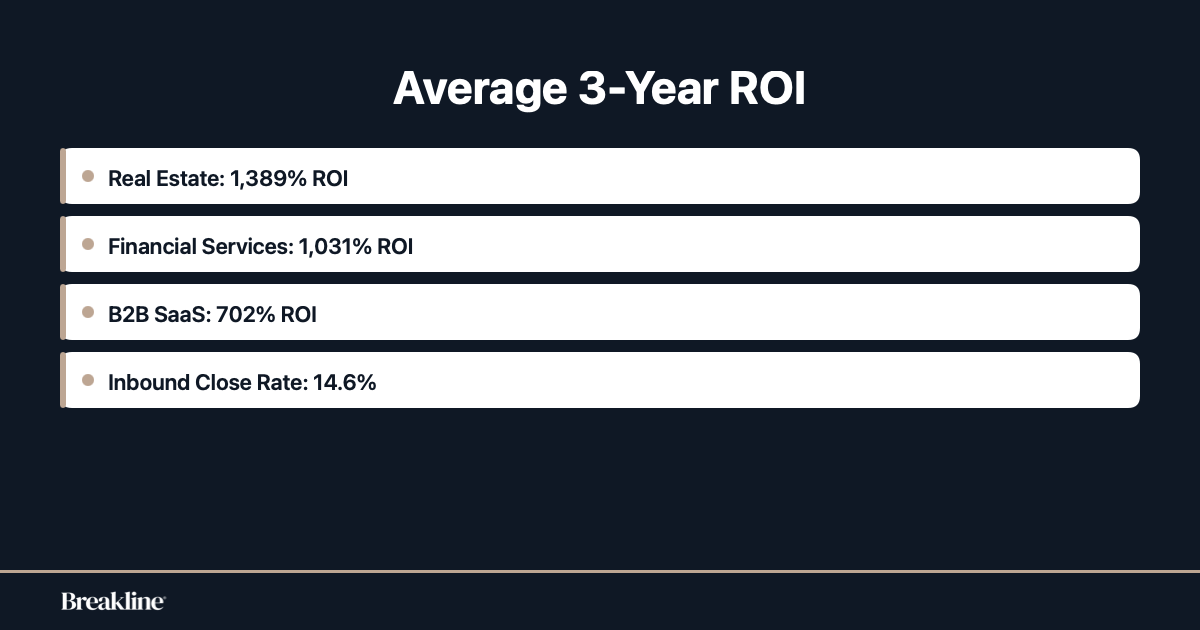
According to recent data from First Page Sage, the average ROI for SEO campaigns is staggering once they mature. We are talking about long-term returns that blow paid ads out of the water. For instance, the Real Estate industry sees a 3-year average ROI of 1,389%. That is not a typo. Financial Services sit at around 1,031%. Even sectors like B2B SaaS, which is incredibly competitive, see returns of 702%.
Why are these numbers so high?
It comes down to intent. When someone goes to Google and types in a problem they are actively looking for a solution. They are not scrolling through a feed looking at cat videos only to be interrupted by your ad. They want you. This is why SEO leads have a close rate of 14.6%, compared to a miserable 1.7% for outbound methods like cold calling or direct mail. It is simply a more efficient use of your marketing budget.
Waiting is the hardest part
Here is where most people quit. The break-even point.
You start an SEO campaign. You pay your agency or your in-house guy. Month one passes. Nothing. Month two. Maybe a slight blip in traffic. Month three. You are still in the red. This is the “valley of death” for many campaigns. I have had clients call me in month four, sweating, asking if the algorithm hates them. It doesn’t.
The data suggests that for most industries, the time to break-even is somewhere between 5 and 14 months. For B2B SaaS, you might see it in 7 months. For Medical Devices, it might take 13 months. You have to have the runway to survive that initial build phase. If you pull the plug in month six because you haven’t become a millionaire yet, you have essentially just set fire to your budget for no reason.
SEO vs paid advertising

Building Equity vs Renting
I often hear people say they prefer PPC because it is instant. And they are right. It is instant. You turn the tap on & you get traffic. You turn the tap off & the traffic dies instantly.
That is the trap.
With Google Ads or Facebook Ads, you are renting attention. With SEO, you are building equity. It is the difference between renting an apartment and buying a house. Sure, buying the house takes a massive down payment and a lot of paperwork, but eventually, you own the roof over your head. 70% of marketers say SEO generates more sales than PPC. Why? Because users trust organic results more. There is a subconscious understanding that you earned that spot rather than bought it.
Plus, the cost per acquisition tends to drop over time with SEO. With paid ads, costs usually go up as competition increases. Inflation hits ad auctions hard. But a well-optimized piece of content can bring in leads for years without you spending another penny on it.
Generative Engine Optimization is here
Things are getting weird though.
We used to just talk about keywords and backlinks. Now we have to talk about Generative Engine Optimization. It sounds like a buzzword invented by a consultant to charge more fees but it is actually quite important. This is the practice of optimizing content for AI-driven search experiences, like Google’s AI Overviews or ChatGPT.
The search game is shifting. Semrush notes that AI-generated content already appears in about 17.3% of search results. People are using AI to find answers. If your content isn’t structured in a way that these engines can understand and synthesize, you are going to be invisible. Generative Engine Optimization focuses on authority and comprehensive answers.
It seems that “Thought Leadership” SEO is the winner here. Strategies that focus on high-quality, expert-led content are seeing ROIs of 748%. This is compared to just 16% for basic content marketing. The days of churning out 500-word generic blog posts are over. Dead. Buried. You need to provide real value or the AI will just ignore you.
Does it work for small businesses?
I get asked this a lot by local business owners. Plumbers. Dentists. Cafe owners. They think SEO is a game for the big corporates with bottomless pockets.

Local Mobile Intent
Actually, the opposite is true.
Local SEO is arguably the most powerful tool a small business has. Think about it. When you need a pizza, what do you do? You search “pizza near me”. You don’t look for a billboard. You look at your phone. 46% of all Google searches have local intent. And here is the kicker. 76% of people who search for something nearby on their smartphone visit a related business within a day. 28% of those searches result in a purchase.
For small and medium enterprises (SMEs), local SEO yields 3x the ROI compared to other channels. It drives 300% more conversions than social media networks. So if you are a local business and you are ignoring your Google Business Profile, you are basically leaving cash on the table every single day.
Where the money actually goes
It helps to understand what you are paying for.

The SEO Investment Stack
Some people think SEO is just “sprinkling keywords” on a page. I wish it was that easy. My life would be a lot simpler. In reality, a good campaign is a mix of technical fixes, content creation, and digital PR. Technical SEO has a lower ROI on its own (around 117%) but it is the foundation. If your site is broken or slow, Google won’t rank it no matter how good your content is.
The big money is in the content. This is where you create the assets that attract links and traffic. But it’s expensive. You need writers who actually know what they are talking about. You need editors. You need strategists to plan the roadmap. It is a production line.
Sometimes you have to spend money to fix mistakes from the past too. I have seen sites with toxic backlink profiles that needed months of cleanup work before we could even think about growth. It is like trying to run a marathon with a backpack full of rocks. You have to dump the rocks first.
When you should not do SEO
I am going to be honest. Sometimes SEO is a bad idea.
If you are a startup with two months of cash left in the bank, do not hire an SEO agency. Seriously. Don’t do it. We cannot save you in 60 days. You need to run ads or pick up the phone and sell. SEO is for businesses that are stable enough to invest in their future. It is a wealth preservation and growth strategy, not a survival strategy.
Also, if your product is terrible, SEO won’t help. In fact, it will just help more people find out that your product is terrible faster. Fix your business first. Then amplify it with search.
There is also the issue of your industry. If you are selling a completely new invention that nobody knows exists, nobody is searching for it. You can’t capture demand that isn’t there. In that case, you need brand awareness first. Social media or PR might be better to generate that initial interest. Once people know what your widget is, then they will start searching for it.
The impact of zero-click searches
We need to talk about zero-click searches.
This is a trend that scares a lot of people. A zero-click search happens when Google answers the user’s question right there on the results page. The user gets what they need & leaves without ever visiting a website. HubSpot and other data sources suggest this is happening more often, with some estimates saying 60% of searches end without a click.
Does this mean SEO is dying? No.
It just means the game is changing. You have to optimize for keywords that actually require a click. Informational queries like “what is the capital of France” are dead for traffic. Google will just say “Paris” and that’s it. But complex queries? “How to choose the best CRM for a real estate business?” Google can’t answer that in a snippet. That requires a deep dive. That requires your expertise.
You have to adapt. You have to target keywords with high click-through potential. You have to create content that provides nuance and opinion, things that an algorithm can’t easily summarize. It is about being un-summarizable. Is that a word? I don’t know.
Why consistency beats intensity
I see this pattern all the time.
A business gets excited about SEO. They publish 50 articles in one month. They go crazy. Then they get tired. They stop. Three months later they post one thing. Then nothing for six months. This approach fails every time. Google likes consistency. It wants to see that you are a living, breathing entity that updates its site regularly.
It is better to publish one high-quality article every week for a year than to dump fifty articles in January and disappear until December. It signals reliability. It builds a habit for your readers too. It helps you accomodate the changing algorithms slowly rather than trying to game the system all at once.
The algorithm is volatile. Google issues 500 to 600 updates a year. Most are small. Some are massive. If you are constantly chasing the latest “hack,” you will get burned. If you focus on consistent quality, you tend to weather the storms much better. I have seen sites lose 40% of their traffic overnight because they relied on a gimmick. The ones that focused on user value usually recovered or didn’t drop at all.
The mobile factor
If your site sucks on mobile, you are in trouble.
Mobile traffic is hovering around 60% of all web traffic. Google uses mobile-first indexing. That means it looks at the mobile version of your site to decide where you rank. If your desktop site is beautiful but your mobile site is a mess of pop-ups and tiny text, you are going to lose. Badly.
I still see businesses launching sites that look great on a 27-inch monitor but are unusable on an iPhone. It drives me crazy. The user experience is part of SEO. If people bounce instantly because they can’t click the button, Google notices. They drop your rankings. It is all connected.
And speed matters. Every second of delay in mobile load time can impact conversions by up to 20%. People are impatient. I am impatient. If a page doesn’t load in three seconds, I’m gone. Aren’t you?
Measuring what matters
Traffic is vanity. Revenue is sanity.
I tell my team this all the time. You can have 100,000 visitors a month, but if they are all reading a blog post about “funny cat memes” and you sell industrial air conditioners, that traffic is worthless. You need to measure the right things. Are the rankings leading to conversions? Are the leads qualified?
The formula for SEO ROI is pretty simple: (Net Profit from SEO Campaign ÷ SEO Campaign Costs) × 100. You need to track this. If you aren’t tracking conversions, you are flying blind. You need to know which keywords are driving the money.
If you want to skip the manual math, Loopex Digital’s free SEO ROI Calculator does the heavy lifting for you: plug in your traffic, conversion rate, and average order value to get a clear projection of what SEO could realistically return for your business.
Sometimes the lower volume keywords are the most profitable. I would rather rank #1 for a keyword with 50 searches a month that converts at 10% than a keyword with 10,000 searches that converts at 0.01%. It is about quality, not just quantity. Don’t get distracted by the big numbers on the dashboard if they don’t translate to the bank account.
The Bottom Line
So, is it worth it? For most businesses, yes. It is the most sustainable way to grow. It builds an asset that pays dividends for years. It lowers your reliance on paid ads. It builds trust.
But it is hard work. It takes time. It requires you to trust the process when every instinct in your body is screaming for instant gratification. It requires you to create things that are actually good, not just things that fill space. If you can do that, and if you can wait out the first six months of silence, the rewards are massive. If you can’t, well, there is always PPC.